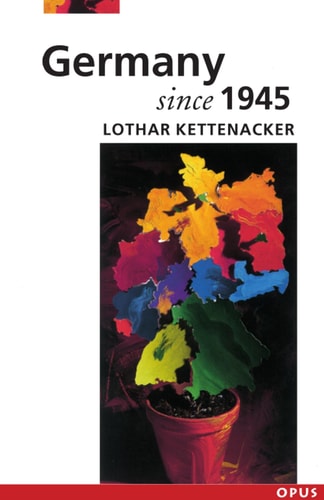
Germany since 1945
0
0
As an Amazon Associate and affiliate partner, Menrva Books earns from qualifying purchases. Learn more
Author Description
Defeat and unconditional surrender were the foundations on which postwar Germany was built. The overall impact, however, was not apathy, but a mentality which was down to earth, pragmatic, and forward-looking. Crucial structures survived which contributed to West Germany's phenomenal recovery, while the East was forced to submit to a ruthless Soviet leadership. Kettenacker's book offers a fascinating survey of the fortunes and features of East and West Germany--how the two states drifted apart; the differences between their economies, politics, and cultures; and the problems and events surrounding their recent unification.
Menrva's Summary
THE THESIS
This book investigates the divergent political, economic, and social trajectories of East and West Germany following the unconditional surrender of 1945. Lothar Kettenacker, a distinguished historian of modern Germany, utilizes a comparative framework to analyze how the two states emerged from the ruins of war. He argues that while West Germany leveraged surviving institutional structures to achieve rapid recovery, the East was constrained by Soviet-imposed governance, ultimately shaping the conditions that led to their eventual reunification.
THE SCOPE MAP
What You Will Find
- Comparative analysis of East and West German political systems
- Examination of economic recovery models and cultural shifts
- Historical overview of the Cold War division and the process of reunification
Scope Limits
- Does not provide an exhaustive day-by-day chronicle of every political event
- Focuses primarily on state-level developments rather than localized social histories
THE AUTHORITY PERSPECTIVE
Experts recognize this work as a concise and accessible survey suitable for students and those seeking a foundational understanding of postwar German history. Readers frequently note that the prose is clear and provides a balanced overview of complex geopolitical developments.
Page Count:
352
Publication Date:
1997-07-31
Publisher:
Oxford University Press
ISBN-10:
0192892428
ISBN-13:
9780192892423
History
European History
Germany economic conditions
German history
20th Century
Germany East
Community Tags
Similar Books