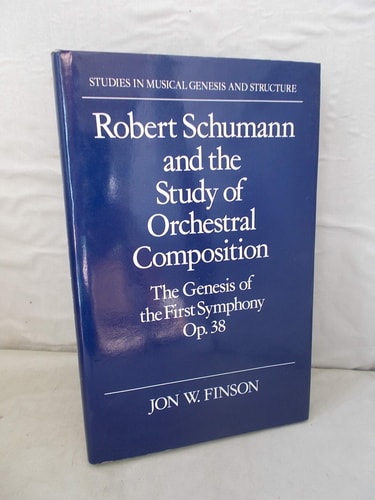
Robert Schumann and the Study of Orchestral Composition: The Genesis of the First Symphony, Op. 38
0
0
As an Amazon Associate and affiliate partner, Menrva Books earns from qualifying purchases. Learn more
Author Description
Robert Schumann sketched his First Symphony in only four days--a remarkable feat for an artist poorly versed in the genre. In this study, Jon Finson examines these sketches to show how the composer's experience with symphonic composition and his autodidactic course in orchestration assisted in the rapid fashioning of this symphony--a work deliberately calculated to establish his reputation as a major artist. Finson also provides examples of the autograph score and subsequent editions of the Spring Symphony to reveal Schumann's empirical method of orchestration and his concern for the exigencies of performance.
Menrva's Summary
THE THESIS
This study investigates the compositional process and orchestration techniques Robert Schumann employed to complete his First Symphony in a remarkably short timeframe. Jon W. Finson, a scholar of 19th-century music, utilizes primary source sketches and autograph scores to demonstrate how Schumann transitioned from smaller forms to large-scale symphonic writing. The book argues that the symphony was a strategic effort by the composer to solidify his standing as a major artist through a rigorous, self-taught approach to orchestral structure.
THE SCOPE MAP
What You Will Find
- Analysis of the original sketches for the First Symphony, Op. 38
- Comparison between the autograph score and subsequent published editions
- Examination of Schumann's autodidactic methods regarding orchestration
Scope Limits
- The analysis is strictly focused on the genesis of the First Symphony and does not cover Schumann's later symphonic works in equal depth
- The text assumes a foundational knowledge of music theory and orchestral notation
THE AUTHORITY PERSPECTIVE
Musicologists and scholars frequently cite this work as a definitive resource for understanding Schumann's creative process and his technical development as an orchestrator. Readers often note the academic density of the prose, which provides a high level of detail suitable for students and professionals in the field of musicology.
Page Count:
170
Publication Date:
1989-12-07
Publisher:
Oxford University Press
ISBN-10:
0193132133
ISBN-13:
9780193132139
Biography
Music
Orchestration
Music History
Music theory
Community Tags
Similar Books