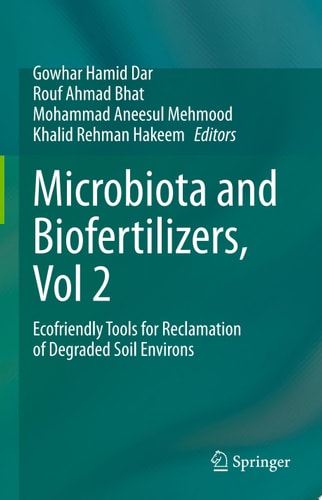
Microbiota and Biofertilizers, Vol 2
0
0
As an Amazon Associate and affiliate partner, Menrva Books earns from qualifying purchases. Learn more
Author Description
The dependence of present farming on artificial input of “chemical fertilizers” has caused numerous ecological tribulations associated with global warming and soil contamination. Moreover, there is an essential requirement for realistic agricultural practices on a comprehensive level. Accordingly, biofertilizers including microbes have been recommended as feasible environmentally sound solutions for agricultural practices which not only are natural, and cost-effective but also preserve soil environs and important biota of agricultural land. In addition, it enhances the nutrient quantity of soils organically. Microbial biofertilizers promote plant growth by escalating proficient absorption of nutrients for the plants and by providing an excellent disease-fighting mechanism.Agriculture, the backbone of human sustenance, has been put under tremendous pressure by the ever-increasing human population. Although various modern agro-techniques boosted agricultural production, the excessive useof synthetic fertilizers, pesticides and herbicides have proven extremely detrimental to agriculture as well as to the environment in which it is carried out. Besides this some faulty agricultural practices like monoculture and defective irrigation, further complicate the scenario by eliminating biodiversity, increasing the efflux of nutrients into the water bodies, the formation of algal blooms, eutrophication, damaging the water quality and lowering fish stocks. Biofertilizers are the organic compounds applied to crops for their sustainable growth and the sustainability of the environment as the microbiota associated with biofertilizers interact with the soil, roots and seeds to enhance soil fertility. Application of biofertilizers results in the increased mineral and water uptake, root development, vegetative growth and nitrogen fixation besides liberating growth-promoting substances and minerals that help the maintenance of soil fertility. They further act as antagonists and play a
Menrva's Summary
THE THESIS
The dependence on chemical fertilizers in modern agriculture has led to severe ecological problems, necessitating a shift towards sustainable practices. This book explores the role of microbial biofertilizers as environmentally sound, cost-effective solutions that enhance soil fertility and plant growth. It details how these natural compounds interact with soil, roots, and seeds to improve nutrient absorption, disease resistance, and overall agricultural sustainability, addressing the detrimental effects of synthetic inputs and faulty farming methods.
THE SCOPE MAP
- The ecological and environmental consequences of synthetic fertilizer use in agriculture.
- The definition and benefits of biofertilizers, including their natural and cost-effective nature.
- The role of microbiota in enhancing soil fertility and promoting plant growth.
- Mechanisms by which microbial biofertilizers improve nutrient uptake, disease resistance, and plant development.
- The impact of faulty agricultural practices like monoculture and improper irrigation on biodiversity and water quality.
- Biofertilizers as antagonists and their role in maintaining soil health.
- Organic compounds applied to crops for sustainable growth and environmental preservation.
THE AUTHORITY PERSPECTIVE
This volume addresses the critical need for sustainable agricultural practices by focusing on the benefits of microbial biofertilizers. It highlights how these natural solutions counteract the negative impacts of chemical fertilizers and faulty farming techniques on soil health and the environment. The book details the mechanisms by which biofertilizers enhance nutrient absorption, disease resistance, and overall plant vitality. It serves as a comprehensive resource for understanding and implementing eco-friendly approaches in agriculture.
Page Count:
350
Publication Date:
2021-03-31
Publisher:
Springer Nature
ISBN-10:
3030610101
ISBN-13:
9783030610104
Science
Non-Fiction
Soil Science
Agriculture
Microbiology
Community Tags
Similar Books




Reader Comments
Share Your Thoughts
No comments yet. Be the first to share your thoughts!