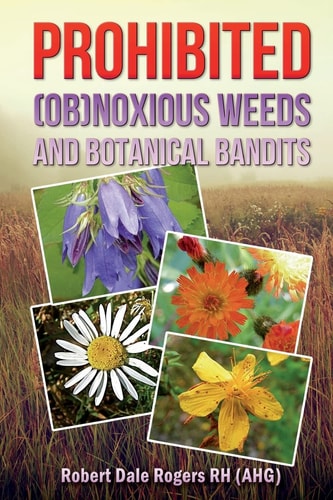
Prohibited (Ob)Noxious Weeds: Botanical Bandits
0
0
As an Amazon Associate and affiliate partner, Menrva Books earns from qualifying purchases. Learn more
Author Description
What is a weed? A plant whose virtues have never been discovered. (Ralph Waldo Emerson) This oft cited quote is only partially correct. All the plants in this book, according to the weed act of alberta, are prohibited and noxious weeds. They are banned in many other provinces and states as well. But they do have virtues! They all contribute to our well being in ways you will discover in these pages. I think it is important to understand what industrial agriculture means by the term "noxious weed". They mean a plant that interferes with agri-business and therefore requires destruction with dangerous herbicides. In a more self-aware agronomic culture, these so-called weeds would be harvested for medicine and food. The use of pesticides and herbicides, promoted by various petrochemical interests, would be banned by a progressive, enlightened agriculture policy that valued people's health. Instead, we have individuals trained by chemical company interests, telling people which plants are good and which are (ob)noxious. They whom truth and wisdom lead, can gather honey from a weed. (William Cowper) A weed is a plant that has mastered every survival skill except for learning how to grow in rows. (Doug Larson)
Menrva's Summary
THE THESIS
This book challenges the conventional definition of 'noxious weeds' by exploring the often-overlooked virtues and potential uses of plants deemed undesirable by agricultural industries. The author, Robert Dale Rogers, argues that plants classified as prohibited and noxious weeds under acts like Alberta's Weed Control Act, and banned elsewhere, possess significant medicinal and nutritional value. The text critiques the influence of petrochemical interests in promoting herbicides and pesticides, advocating instead for an agronomic culture that recognizes these plants as resources for medicine and food.
THE SCOPE MAP
- Exploration of plants classified as prohibited and noxious weeds.
- Discussion of the virtues and potential uses of these plants for medicine and food.
- Critique of industrial agriculture's definition of 'noxious weeds'.
- Analysis of the role of herbicides and pesticides in weed management.
- Advocacy for an enlightened agricultural policy that values human health and plant resources.
- Inclusion of quotes from Ralph Waldo Emerson, William Cowper, and Doug Larson on the nature of weeds.
THE AUTHORITY PERSPECTIVE
The book presents a contrarian view on plants commonly labeled as weeds, drawing on botanical and agricultural definitions to question their negative classification. It highlights the potential benefits of these plants, particularly in medicinal and food applications, contrasting this with the industrial agricultural perspective that often advocates for their destruction via herbicides. The author's stance suggests a re-evaluation of what constitutes a 'weed' and promotes a more holistic approach to agriculture that considers human well-being and the inherent value of all plant life.
Page Count:
362
Publication Date:
2014-03-15
Publisher:
CreateSpace Independent Publishing Platform
ISBN-10:
1497323665
ISBN-13:
9781497323667
Science
Non-Fiction
Herbalism
Agriculture
Botany
Community Tags
Similar Books