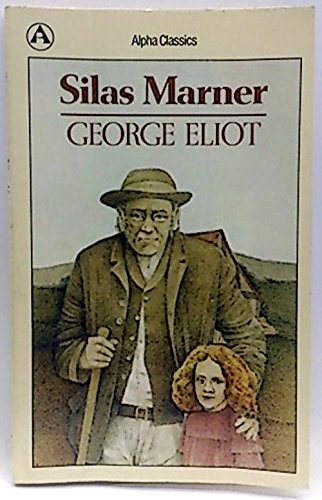
Silas Marner
0
0
As an Amazon Associate and affiliate partner, Menrva Books earns from qualifying purchases. Learn more
Author Description
This work has been selected by scholars as being culturally important, and is part of the knowledge base of civilization as we know it. This work was reproduced from the original artifact, and remains as true to the original work as possible. Therefore, you will see the original copyright references, library stamps (as most of these works have been housed in our most important libraries around the world), and other notations in the work.This work is in the public domain in the United States of America, and possibly other nations. Within the United States, you may freely copy and distribute this work, as no entity (individual or corporate) has a copyright on the body of the work.As a reproduction of a historical artifact, this work may contain missing or blurred pages, poor pictures, errant marks, etc. Scholars believe, and we concur, that this work is important enough to be preserved, reproduced, and made generally available to the public. We appreciate your support of the preservation process, and thank you for being an important part of keeping this knowledge alive and relevant.
Menrva's Summary
THE PULSE
A reclusive weaver is forced to confront his isolation when a golden-haired child appears on his doorstep, shattering his solitary existence. Silas Marner, a man unjustly accused of theft and exiled from his religious community, lives a life of quiet bitterness in the village of Raveloe. His only solace is the accumulation of gold, which serves as a physical manifestation of his lost faith and human connection. When his hoard is stolen, he is thrust into the social life of the village, eventually finding purpose through the unexpected arrival of a young girl named Eppie. The narrative employs a third-person omniscient perspective to examine the moral evolution of its protagonist against the backdrop of a changing rural society.
INSIDE THE PAGES
- Exploration of industrialization and its impact on rural life
- Examination of religious hypocrisy and communal judgment
- Use of symbolism regarding gold and material wealth
- Character-driven narrative focusing on personal redemption
- Detailed depiction of 19th-century English village social structures
- Contrast between the isolated individual and the integrated community
- Themes of parental love and the influence of nature
- Moral philosophy integrated into the development of the protagonist
THE COLLECTIVE ECHO
Readers frequently highlight the precision of Eliot's prose and her ability to render the internal lives of ordinary people with profound empathy. Discussion often centers on the transformation of Silas from a miserly recluse to a man restored by the responsibilities of fatherhood. Critics often point to the balance between the novel's social critique of Victorian class structures and its focus on the redemptive power of human connection. The pacing is noted for its deliberate, steady progression, allowing the reader to fully inhabit the atmosphere of Raveloe. This work remains a staple in discussions regarding the development of the psychological novel.
Page Count:
96
Publication Date:
1979-12-01
Publisher:
Oxford University Press
ISBN-10:
0194241831
ISBN-13:
9780194241830
Victorian
classic
Reference
Social Commentary
Historical
Foreign Study
Realism
Schools & Teaching
Community Tags
Other Editions(30)

Independently Published
2022
Default edition
Independently published
2022

Independently published
2021
Oxford University Press España, S.A.
2015

Oxford University Press
2014
Nabu Press
2012

Oxford University Press
2012

Oxford University Press
2010

Nabu Press
2010
Kessinger Publishing, LLC
2010

Nabu Press
2010

Hardpress Publishing
2010

Oxford University Press España, S.A.
2010

Oxford University Press España, S.A.
2009

BiblioLife
2009
BiblioLife
2009

Bibliolife
2009

BiblioLife
2009

BiblioLife
2008

Oxford University Press
2008

Kessinger Publishing, LLC
2007

BiblioBazaar
2007

Kessinger Publishing
2005

Oup Oxford
1998

Penguin Classics
1997

Naxos Audio Books
1995

Curley Pub
1991

Buccaneer Books
1987
Oxford University Press
1979
Signet Classics
1960
Similar Books













Reader Comments
Share Your Thoughts
No comments yet. Be the first to share your thoughts!