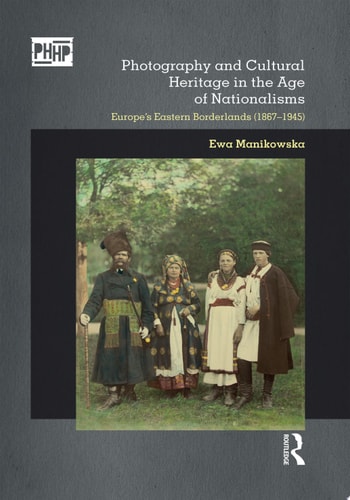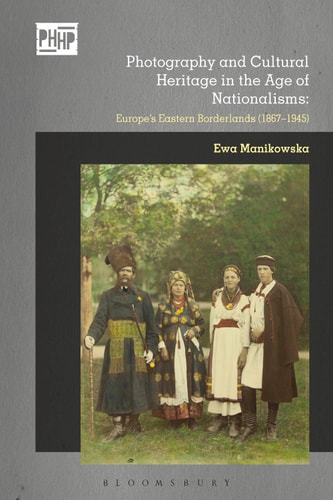
Photography and Cultural Heritage in the Age of Nationalisms: Europe's Eastern Borderlands (1867-1945)
0
0
As an Amazon Associate and affiliate partner, Menrva Books earns from qualifying purchases. Learn more
Author Description
The second half of the 19th century was a time of extensive political upheaval in central east Europe that saw the negotiation of conflicting territorial claims in the region by the Russian, Austrian and Prussian empires. The post-WW1 settlement gave rise to the formation of the independent nation states of Poland, Lithuania, Ukraine, Latvia and Belarus. Less well know is that this same period was also an era of keen photographic activity. During this time of empire-, state- and nation-building, cultural heritage was a potent vehicle and a provider of collective memory and identity.This innovative account analyses the relationship between politics, history, cultural heritage and photography in central east Europe between 1859 and 1945. To understand the work photographs 'do' in the construction of cultural heritage, the author analyses a wide range of little-known photographic archives created by contemporary professional and amateur photographers. Their work was extensively exploited in contemporary debates, appearing in albums, books, journals, exhibitions, museum exhibits, postcards and newspapers aimed at both scientific and popular and national and international publics. An extensive analysis of how photographic practices and outcomes were applied, borrowed, copied, appropriated and transmitted shows how photography was used to exert or subvert power, on the one hand, and as a tool in constructing and negotiating group identities on the other. By weaving photography and its patterns of making, dissemination and archival survival through major historical narratives, this volume reveals the centrality of photography and visual discourse at pivotal moments of modern history.
Menrva's Summary
THE THESIS
This book investigates the complex interplay between photography, cultural heritage, and the rise of nationalisms in Eastern Europe between 1867 and 1945. It examines how photographic practices were employed during periods of empire, state, and nation-building to construct collective memory and identity. The author analyzes a wide array of lesser-known photographic archives created by both professional and amateur photographers, exploring their extensive use in contemporary debates and publications. The work reveals how photography served as a tool for exerting or subverting power and for negotiating group identities during pivotal moments in modern history.
THE SCOPE MAP
- Analysis of photographic activity in Central and Eastern Europe from 1867 to 1945.
- Examination of the role of cultural heritage as a vehicle for collective memory and identity.
- Study of the relationship between politics, history, cultural heritage, and photography.
- Analysis of photographic archives created by professional and amateur photographers.
- Exploration of how photographs were used in albums, books, journals, exhibitions, and postcards.
- Investigation into the appropriation and transmission of photographic practices.
- Revelation of photography's centrality in constructing and negotiating group identities and power dynamics.
THE AUTHORITY PERSPECTIVE
The book is positioned as an innovative account that weaves photography through major historical narratives of Eastern Europe. Its focus on lesser-known photographic archives and the detailed analysis of how images were applied, borrowed, and appropriated suggests a scholarly and in-depth exploration of visual discourse. The premise indicates a work that will appeal to those interested in the intersection of visual culture, history, and political identity formation in the region.
Page Count:
262
Publication Date:
2020-01-01
Publisher:
Routledge, Taylor & Francis Group
ISBN-10:
1000212122
ISBN-13:
9781000212129
Non-Fiction
History
Photography
Eastern Europe
Nationalism
Community Tags
Similar Books