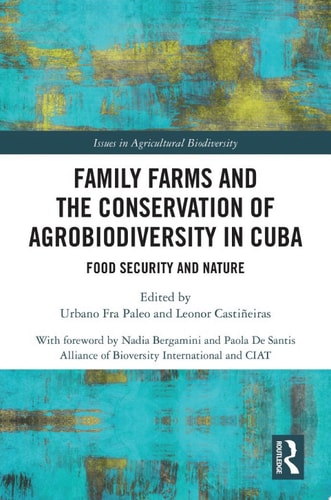
Family Farms and the Conservation of Agrobiodiversity in Cuba
0
0
As an Amazon Associate and affiliate partner, Menrva Books earns from qualifying purchases. Learn more
Author Description
This highly original volume investigates and documents the complex interactions between small family farms and Man and Biosphere Reserves in Cuba. Covering over two decades of research in agriculture and biodiversity conservation in Cuba, this book provides a unique case study about sustainable agriculture. It shows how the agricultural biodiversity maintained in situ by family farms within those protected areas provides a strategic source of crop genetic resources, including seeds and planting materials, as well as agroecological knowledge and practices. Agricultural practices within and around the Biosphere Reserves have helped to promote local food security through healthier and more diverse food production, while contributing to the conservation of biodiversity and of ecosystems. The book also reports on the adoption of transdisciplinary methods, combining ecological, agronomic, and socio-economic research, along with participatory methods involving farmers in research to document ethnobotanical and farmer knowledge, revealing rich spots of agrobiodiversity maintained in landscapes, seed systems, and nurseries managed by farmers. It covers a range of ecosystems and biocultural landscapes from arid tropics, tropical hillsides and savannas, montane rainforests, and coastal areas. It examines how family farms in diverse Cuban ecosystems use biodiversity, agro-ecological knowledge, and techniques while sustaining natural and farming landscapes in a scenario of climate change, frequent disasters, and socio-economic and policy changes. This book will be most suitable for those studying or interested in farming practices, biodiversity conservation, food security, agrobiodiversity, and sustainable development, as well as in Cuban studies.
Menrva's Summary
THE THESIS
This volume investigates the intricate relationship between small family farms and Man and Biosphere Reserves in Cuba, examining their role in conserving agrobiodiversity over two decades. The book presents a unique case study on sustainable agriculture, demonstrating how the agricultural biodiversity maintained by family farms within protected areas serves as a vital source of crop genetic resources, agroecological knowledge, and practices. These practices contribute to local food security through diverse food production while simultaneously aiding biodiversity and ecosystem conservation. The research employs transdisciplinary methods, integrating ecological, agronomic, and socio-economic studies with farmer participation to document ethnobotanical and farmer knowledge.
THE SCOPE MAP
- Analysis of agricultural biodiversity maintained by family farms within Cuban Man and Biosphere Reserves.
- Documentation of crop genetic resources, including seeds and planting materials.
- Exploration of agroecological knowledge and practices developed by farmers.
- Case studies on how agricultural practices promote local food security and diverse food production.
- Examination of transdisciplinary research methods combining ecological, agronomic, and socio-economic approaches.
- Inclusion of participatory methods involving farmers to document ethnobotanical and farmer knowledge.
- Coverage of diverse Cuban ecosystems including arid tropics, tropical hillsides, savannas, montane rainforests, and coastal areas.
THE AUTHORITY PERSPECTIVE
The book is positioned as a valuable resource for students and researchers interested in farming practices, biodiversity conservation, food security, agrobiodiversity, and sustainable development, with a specific focus on Cuban studies. Its detailed examination of in situ conservation by family farms within protected areas offers a unique perspective on the interplay between agriculture and biodiversity. The adoption of transdisciplinary and participatory methods suggests a comprehensive approach to understanding complex socio-ecological systems. The work is likely to appeal to those seeking in-depth case studies on sustainable agriculture in specific geopolitical and environmental contexts.
Page Count:
192
Publication Date:
2023-09-04
Publisher:
Taylor & Francis
ISBN-10:
1351729470
ISBN-13:
9781351729475
Non-Fiction
Science
Biodiversity
Food security
Agriculture
Agroecology
Community Tags
Similar Books














