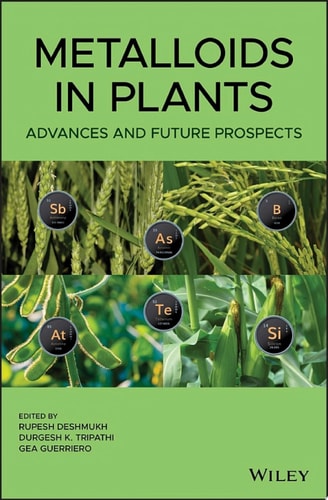
Metalloids in Plants: Advances and Future Prospects
0
0
As an Amazon Associate and affiliate partner, Menrva Books earns from qualifying purchases. Learn more
Author Description
Understanding metalloids and the potential impact they can have upon crop success or failure Metalloids have a complex relationship with plant life. Exhibiting a combination of metal and non-metal characteristics, this small group of elements – which includes boron (B), silicon (Si), germanium (Ge), arsenic (As), antimony (Sb), and tellurium (Te) – may hinder or enhance the growth and survival of crops. The causes underlying the effects that different metalloids may have upon certain plants range from genetic variance to anatomical factors, the complexities of which can pose a challenge to botanists and agriculturalists of all backgrounds. With Metalloids in Plants, a group of leading plant scientists present a complete guide to the beneficial and adverse impacts of metalloids at morphological, anatomical, biochemical, and molecular levels. Insightful analysis of data on genetic regulation helps to inform the optimization of farming, indicating how one may boost the uptake of beneficial metalloids and reduce the influence of toxic ones. Contained within this essential new text, there are: Expert analyses of the role of metalloids in plants, covering their benefits as well as their adverse effects Explanations of the physiological, biochemical, and genetic factors at play in plant uptake of metalloids Outlines of the breeding and genetic engineering techniques involved in the generation of resistant crops Written for students and professionals in the fields of agriculture, botany, molecular biology, and biotechnology, Metalloids in Plants is an invaluable overview of the relationship between crops and these unusual elements.
Menrva's Summary
THE THESIS
This book investigates the complex and often contradictory roles metalloids play in plant life, examining their potential to both enhance and inhibit crop growth. The authors, leading plant scientists, present a comprehensive guide to the beneficial and adverse impacts of metalloids such as boron, silicon, germanium, arsenic, antimony, and tellurium, analyzing these effects at morphological, anatomical, biochemical, and molecular levels. The text delves into the genetic regulation and physiological factors influencing plant uptake, offering insights for optimizing farming practices by managing beneficial and toxic metalloid levels. It aims to inform students and professionals in agriculture, botany, molecular biology, and biotechnology about the intricate relationship between crops and these elements.
THE SCOPE MAP
- Expert analyses of the role of metalloids in plants, covering their benefits as well as their adverse effects.
- Explanations of the physiological, biochemical, and genetic factors at play in plant uptake of metalloids.
- Outlines of the breeding and genetic engineering techniques involved in the generation of resistant crops.
- Insightful analysis of data on genetic regulation to inform the optimization of farming.
- Discussion of how to boost the uptake of beneficial metalloids and reduce the influence of toxic ones.
- Coverage of metalloid impacts at morphological, anatomical, biochemical, and molecular levels.
THE AUTHORITY PERSPECTIVE
This essential new text is written for students and professionals in the fields of agriculture, botany, molecular biology, and biotechnology. It provides an invaluable overview of the relationship between crops and metalloids, drawing on the expertise of leading plant scientists. The book is structured to offer both foundational knowledge and advanced insights into managing metalloid interactions for improved crop success. Its comprehensive approach covers genetic regulation, physiological factors, and practical applications in breeding and genetic engineering.
Page Count:
520
Publication Date:
2020-05-18
Publisher:
Wiley
ISBN-10:
111948720X
ISBN-13:
9781119487203
Science
Non-Fiction
Botany
Biotechnology
Agriculture
Genetics
Community Tags
Similar Books