Buddha Before Buddhism
0
0
As an Amazon Associate and affiliate partner, Menrva Books earns from qualifying purchases. Learn more
Author Description
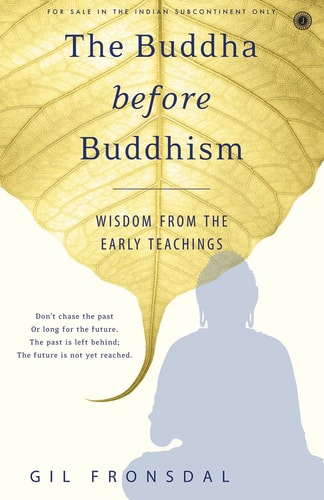
WISDOM FROM THE EARLY TEACHINGS Don’t chase the past Or long for the future. The past is left behind; The future is not yet reached. For one who knows, who has no agitation, There is no karmic accumulation. —from ‘The Discourse on Being Violent’, The Book of Eights Gil Fronsdal’s The Buddha before Buddhism is an elegant translation of Buddhist poems from the Atthakavagga or The Book of Eights, which is believed to be part of the Buddha’s first teachings. In this anthology, reality is not divided into a conditioned, worldly realm and an unconditioned, transcendent realm far removed from ordinary human life, which is a deviation from the usual Buddhist texts. Instead, the teachings point to peace that can be found in this life, in this world. This collection of 16 poems points to a direct and simple approach for attaining peace without requiring an adherence to any specific ideology. In contrast to later Buddhist teachings that are predicated on the belief in rebirth, this book’s central theme is the joy that comes from recognizing and letting go of attachment to the illusory views that create suffering. Gil Fronsdal is co-teacher at the Insight Meditation Center in Redwood City, California. He received his PhD. in religious studies from Stanford University. He has published a highly praised translation of the Dhammapada, as well as two other books: The Issue at Hand and A Monastery Within.
Menrva's Summary
THE THESIS
The Buddha Before Buddhism investigates the earliest teachings of the Buddha, as preserved in the Atthakavagga or 'The Book of Eights'. This collection of 16 poems presents a direct path to peace found within this life, rather than through adherence to specific ideologies or belief in rebirth. The central argument posits that suffering arises from attachment to illusory views, and true joy comes from recognizing and letting go of these attachments.
THE SCOPE MAP
- What You Will Find:
- What You Will Find:
- What You Will Find:
- What You Will Find:
THE AUTHORITY PERSPECTIVE
Gil Fronsdal's translation and interpretation of the Atthakavagga are presented as a significant contribution to understanding early Buddhist thought. The emphasis on finding peace in the present moment, without reliance on complex doctrines or future rebirth, is highlighted as a key aspect of these teachings. The work is noted for its direct and simple approach to attaining peace. The authority perspective suggests this text offers a foundational perspective on Buddhist practice.
Page Count:
192
Publication Date:
2017-12-22
Publisher:
Jaico Publishing House
ISBN-10:
938686729X
ISBN-13:
9789386867292
Non-Fiction
Philosophy
Spirituality
Classics
Buddhism
Community Tags
Similar Books