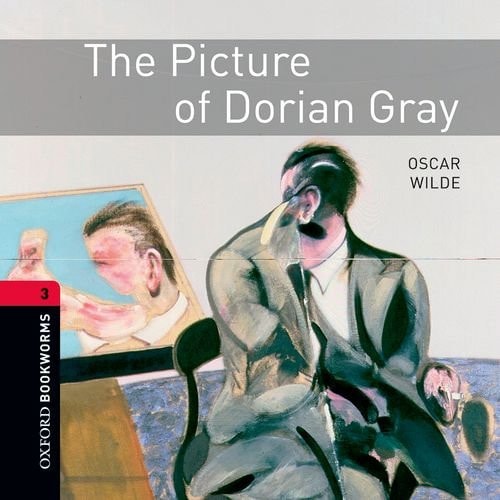
The Picture of Dorian Gray
0
0
As an Amazon Associate and affiliate partner, Menrva Books earns from qualifying purchases. Learn more
Author Description
'When we are happy, we are always good,' says Lord Henry, 'but when we are good, we are not always happy.' Lord Henry's lazy, clever words lead the young Dorian Gray into a world where it is better to be beautiful than to be good; a world where anything can be forgiven - even murder - if it can make people laugh at a dinner party.
Menrva's Summary
THE PULSE
A young man trades his soul to ensure his physical appearance remains eternally youthful while his portrait bears the marks of his moral decay. Driven by the hedonistic influence of Lord Henry Wotton, Dorian Gray pursues a life of uninhibited pleasure and cruelty. He attempts to maintain his social standing and reputation despite his descent into vice, relying on his unchanging face to mask his corruption. The narrative follows his psychological disintegration as he becomes increasingly obsessed with the hidden painting that serves as a physical manifestation of his conscience. The story utilizes a third-person limited perspective to examine the tension between aestheticism and morality in Victorian society.
INSIDE THE PAGES
- Exploration of aestheticism and the philosophy of art
- Use of the portrait as a supernatural symbol of moral decay
- Dialogue-heavy scenes reflecting Victorian social cynicism
- Examination of the duality between public persona and private vice
- Gothic atmosphere set within high-society London
- Themes of vanity, influence, and the corruption of innocence
- Non-linear psychological progression of the protagonist
- Epistolary elements through the influence of the yellow book
THE COLLECTIVE ECHO
Readers frequently highlight the sharp, aphoristic quality of the dialogue, particularly the cynical observations provided by Lord Henry. Discussion often centers on the moral implications of the protagonist's choices and the extent to which his environment facilitates his downfall. Critics often note the effective use of the portrait as a central metaphor for the hidden consequences of a life devoid of empathy. The pacing is generally described as deliberate, allowing for deep philosophical reflection on the nature of beauty and the cost of eternal youth. Many readers find the contrast between the protagonist's outward charm and his internal rot to be the most compelling aspect of the narrative.
Page Count:
72
Publication Date:
2007-12-27
Publisher:
Oxford University Press
ISBN-10:
0194790983
ISBN-13:
9780194790987
Horror
Reference
classic
Foreign Study
Philosophical
Gothic
Literary