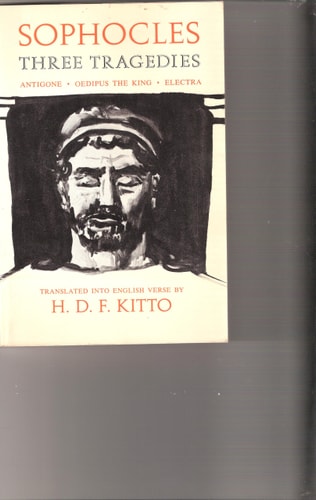
Sophocles: Three Tragedies: Antigone, Oedipus the King, Electra
0
0
As an Amazon Associate and affiliate partner, Menrva Books earns from qualifying purchases. Learn more
Author Description
Faithful as translations and vigorous and straightforward both to read and to act, these versions were written, like their originals, for immediate staage-production.Kitto has deliberately used a fairly strict meter, allowing himself no greater number of verses than Sophocles used, and where the original is formal--as in the line-by-line dialogue--the translations too are formal. The original rhythmic structure of the lyrics has been approximately represented; in the Antigone the lyric passages have been followed as closely as the English language permits.Quasi-musical indications of tempo or mood have been added to the lyrical portions as a reminder that they were not recited but were a fusion of poetry, music, and dancing. There are brief notes on the dance-rhythms, on the pronunciation of Greek names, and on the mythological allusions in the three plays.
Menrva's Summary
THE PULSE
The central conflict arises from the collision between individual moral imperatives and the rigid, often destructive, demands of state or divine law. In these three foundational tragedies, Sophocles explores the fall of noble figures caught in the machinery of fate and hubris. The protagonist in each play—Antigone, Oedipus, and Electra—must navigate a world where their choices are constrained by ancient prophecies and the expectations of their respective societies. The narrative framework utilizes the classical structure of Greek drama, characterized by formal dialogue, choral odes, and a focus on the inevitable consequences of past actions.
INSIDE THE PAGES
- Utilization of formal, line-by-line dialogue to heighten dramatic tension.
- Inclusion of quasi-musical indications to suggest the original fusion of poetry, music, and dance.
- Strict adherence to the original meter and verse count of the Greek source material.
- Exploration of the conflict between personal conscience and civic duty.
- Integration of mythological allusions essential to the understanding of the plot.
- Use of the chorus to provide commentary and reflect the collective voice of the city.
- Focus on the psychological interiority of characters facing inescapable destiny.
- Provision of supplementary notes on pronunciation and dance-rhythms for performance context.
THE COLLECTIVE ECHO
Readers and scholars frequently highlight the accessibility of these translations, noting that they successfully bridge the gap between ancient Greek performance and modern readability. Discussion often centers on the effectiveness of the rhythmic structure, which maintains the formal intensity of the original plays without sacrificing clarity. Critics appreciate the inclusion of stage-production notes, which emphasize that these works were intended for active performance rather than silent reading. The balance between character-driven tragedy and the broader thematic questions of justice and fate remains a primary focus for those studying these texts. Many readers find that the straightforward prose allows the raw power of the dramatic conflicts to remain the central focus of the experience.
Page Count:
159
Publication Date:
1964-12-31
Publisher:
Oxford University Press
ISBN-10:
0195003748
ISBN-13:
9780195003741
Classics
Drama
English drama
Plays
Tragedy
Community Tags
Similar Books