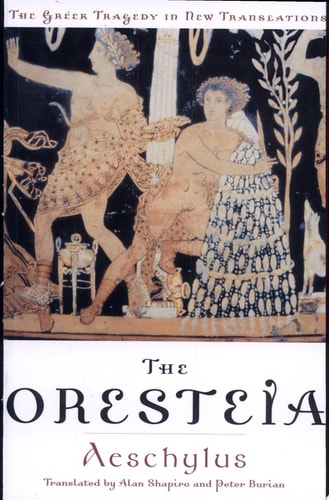
The Oresteia
0
0
As an Amazon Associate and affiliate partner, Menrva Books earns from qualifying purchases. Learn more
Author Description
Aeschylus' Oresteia, the only ancient tragic trilogy to survive, is one of the great foundational texts of Western culture. It begins with Agamemnon, which describes Agamemnon's return from the Trojan War and his murder at the hands of his wife Clytemnestra, continues with her murder by their son Orestes in Libation Bearers, and concludes with Orestes' acquittal at a court founded by Athena in Eumenides. The trilogy thus traces the evolution of justice in human society from blood vengeance to the rule of law, Aeschylus' contribution to a Greek legend steeped in murder, adultery, human sacrifice, cannibalism, and endless intrigue. This new translation is faithful to the strangeness of the original Greek and to its enduring human truth, expressed in language remarkable for poetic intensity, rich metaphorical texture, and a verbal density that modulates at times into powerful simplicity. The translation's precise but complicated rhythms honor the music of the Greek, bringing into English the Aeschylean vision of a world fraught with spiritual and political tensions.
Menrva's Summary
THE PULSE
The cycle of blood vengeance within the House of Atreus reaches a breaking point when Agamemnon returns from Troy to face his wife's lethal betrayal. The narrative follows Orestes as he navigates the moral and divine consequences of matricide, caught between the archaic demands of the Furies and the emerging structures of civic justice. The trilogy utilizes a choral-heavy structure to frame the transition from tribal retribution to the establishment of the Areopagus court. Through a series of interconnected plays, Aeschylus examines the tension between individual agency and the inescapable weight of ancestral curses.
INSIDE THE PAGES
- Utilization of the traditional Greek chorus to provide moral commentary and atmospheric tension
- Exploration of the transition from blood feuds to institutionalized legal systems
- Use of dense, metaphorical language to convey the gravity of divine and human conflict
- Structural progression from the domestic tragedy of Agamemnon to the courtroom drama of Eumenides
- Examination of the role of the gods in human affairs and the establishment of Athenian democracy
- Focus on the psychological burden of matricide and the pursuit of justice
- Incorporation of ritualistic elements such as libations and invocations to the dead
- Rhythmic modulation between complex poetic passages and stark, direct dialogue
THE COLLECTIVE ECHO
Readers and critics frequently analyze the trilogy as a foundational exploration of the shift from private vengeance to public law. Discussion often centers on the moral ambiguity of Orestes' actions and the complex portrayal of Clytemnestra as both victim and perpetrator. Scholars highlight the effectiveness of the choral odes in establishing the trilogy's somber and ominous atmosphere. The work remains a central point of study for its influence on Western dramatic structure and its enduring questions regarding the nature of justice.
Page Count:
304
Publication Date:
2004-10-07
Publisher:
Oxford University Press
ISBN-10:
019513592X
ISBN-13:
9780195135923
Drama
Classics
Poetry
Plays
Dramatic works
Tragedy
Community Tags
Other Editions(18)

University of Chicago Press
2019
Default edition
W. W. Norton
2018
Bloomsbury UK
2015
CreateSpace Independent Publishing Platform
2015

Random House Digital Inc.
2014
Univ of California Press
2014
eBookit.com
2013

Penguin USA, Inc.
2009

Blackstone Audio Inc.
2007
Blackstone Audio Inc.
2007
RicherResourcesPublications
2007
Oxford University Press
2004
Everyman's Library
2004
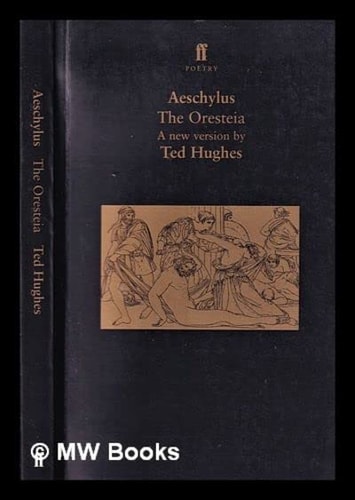
Farrar, Straus and Giroux
1999

University of Chicago Press
1989
Bantam Books
1982

Penguin Books
1979
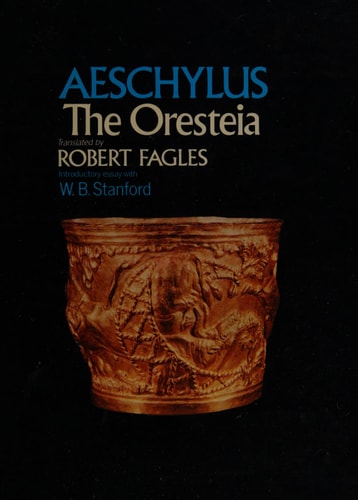
Wildwood House
1976
Similar Books



Reader Comments
Share Your Thoughts
No comments yet. Be the first to share your thoughts!