
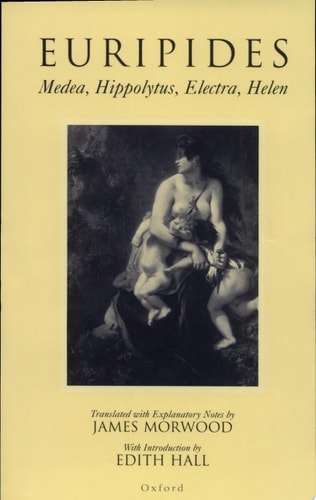
Medea and Other Plays
0
0
As an Amazon Associate and affiliate partner, Menrva Books earns from qualifying purchases. Learn more
Author Description
Euripides was one of the most popular and controversial of all Greek tragedians, and his plays are marked by an independence of thought, ingenious dramatic devices, and a subtle variety of register and mood. He is also remarkable for the prominence he gave to female characters, whether heroines of virtue or vice. This new translation does full justice to Euripides's range of tone and gift of narrative. A lucid introduction provides substantial analysis of each play, complete with vital explanations of the traditions and background to Euripides's world.Contains: Medea; Hippolytus; Electra; HelenAbout the Series: For over 100 years Oxford World's Classics has made available the broadest spectrum of literature from around the globe. Each affordable volume reflects Oxford's commitment to scholarship, providing the most accurate text plus a wealth of other valuable features, including expert introductions by leading authorities, voluminous notes to clarify the text, up to date bibliographies for further study, and much more.
Menrva's Summary
THE PULSE
The central conflict arises from the collision between individual passion and the rigid social or divine structures of the ancient Greek world. Each play follows a protagonist—such as the vengeful Medea or the conflicted Hippolytus—as they navigate extreme moral dilemmas that threaten their survival and sanity. These narratives utilize a formal structure involving dialogue, choral odes, and sudden reversals of fortune to examine the fragility of human agency. The text presents these conflicts through a lens of intense psychological scrutiny, often highlighting the isolation of the central figure against a backdrop of societal judgment.
INSIDE THE PAGES
- Exploration of complex female archetypes and their motivations
- Use of the chorus to provide social commentary and emotional framing
- Integration of divine intervention as a catalyst for human tragedy
- Focus on the tension between rational thought and irrational impulse
- Employment of dramatic irony to heighten the sense of impending doom
- Examination of the consequences of betrayal and broken oaths
- Stylistic variety ranging from intimate dialogue to grand rhetorical speeches
- Structural reliance on the reversal of fortune to drive the narrative arc
THE COLLECTIVE ECHO
Discussion often centers on the enduring relevance of Euripides's characterizations, particularly his willingness to challenge the moral conventions of his time. Readers frequently highlight the stark contrast between the domestic intimacy of his scenes and the catastrophic scale of the outcomes. Critics often point to his innovative use of dramatic devices, which allow for a more nuanced exploration of human psychology than his contemporaries. The collection is widely regarded for its ability to maintain a balance between philosophical inquiry and visceral theatrical impact, ensuring that the emotional stakes remain high throughout each performance.
Page Count:
272
Publication Date:
2009-02-15
Publisher:
Oxford University Press
ISBN-10:
0199537968
ISBN-13:
9780199537969
Drama
Tragedy
Plays
Classical
English drama
Greek Mythology
Dramatic works
Community Tags
Other Editions(8)




Similar Books








Reader Comments
Share Your Thoughts
No comments yet. Be the first to share your thoughts!