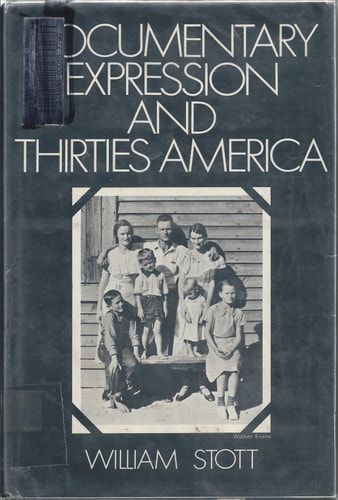
Documentary Expression and Thirties America
0
0
As an Amazon Associate and affiliate partner, Menrva Books earns from qualifying purchases. Learn more
Author Description
A comprehensive inquiry into the attitudes and ambitions that characterized the documentary impulse of the thirties. The subject is a large one, for it embraces (among much else) radical journalism, academic sociology, the esthetics of photography, Government relief programs, radio broadcasting, the literature of social work, the rhetoric of political persuasion, and the effect of all these on the traditional arts of literature, painting, theater and dance. The great merit of Mr. Stott's study lies precisely in its wide-ranging view of this complex terrain.
Menrva's Summary
THE THESIS
This book investigates the cultural, political, and aesthetic motivations that defined the documentary movement in the United States during the 1930s. William Stott, an expert in American cultural history, examines how the era's social crises necessitated a new form of expression that blended objective reporting with subjective emotional appeal. He argues that the documentary impulse was not merely a stylistic choice but a pervasive rhetorical strategy used by government agencies, journalists, and artists to shape public perception of the Great Depression.
THE SCOPE MAP
What You Will Find
- Analysis of the intersection between radical journalism, academic sociology, and government relief programs.
- Examination of the aesthetic principles governing 1930s photography and radio broadcasting.
- Evaluation of how documentary techniques influenced traditional arts like painting, theater, and literature.
- A critical framework for assessing the rhetoric of political persuasion and social work literature from the period.
THE AUTHORITY PERSPECTIVE
Critics and scholars frequently cite this work as the foundational text for understanding the documentary aesthetic of the 1930s. Experts highlight the author's comprehensive approach, noting that the text remains an essential resource for those studying the intersection of art, politics, and social history.
Page Count:
361
Publication Date:
1973-01-01
Publisher:
Oxford University Press
ISBN-10:
019501717X
ISBN-13:
9780195017175
Photography
History
American Studies
Journalism
Sociology
Community Tags
Other Editions(2)
Similar Books