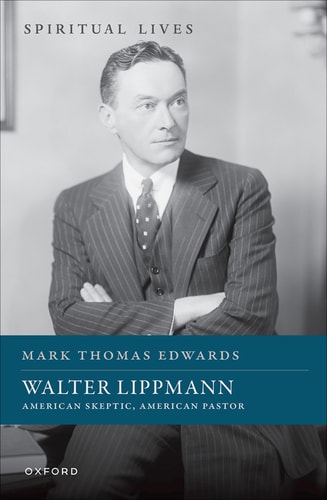
Walter Lippmann: American Skeptic, American Pastor
0
0
As an Amazon Associate and affiliate partner, Menrva Books earns from qualifying purchases. Learn more
Author Description
Walter Lippmann was arguably the most recognized and respected political journalist of the twentieth century. His "Today and Tomorrow" columns attracted a global readership of well over ten million. Lippmann was the author of numerous books, including the best-selling A Preface to Morals (1929) and U.S. Foreign Policy (1943). His Public Opinion (1922) remains a classic text within American political philosophy and media studies. Lippmann coined or popularized several keywords of the twentieth century, including "stereotype," the "Cold War," and the "Great Society." Sought out by U.S. Presidents and by America's allies and rivals around the world, Lippmann remained one of liberalism's most faithful proponents and harshest critics.Yet few people then or since encountered the "real" Walter Lippmann. That was because he kept crucial parts of himself hiding in plain sight. His extensive commentary on politics and diplomacy was bounded by his sense that America had to adjust to the loss of a common faith and morality in a "post-Christian" era. Over the course of his life, Lippmann traded in his fame as a happy secularist for the stardom of a grumpy Western Christian intellectual. Yet he never committed himself to any religious system, especially his own Jewish heritage.Walter Lippmann: American Skeptic, American Pastor considers the role of religions in Lippmann's life and thought, prioritizing his affirmation and rejection of Christian nationalisms of the left and right. It also yields fresh insights into the philosophical origins of modern American liberalism, including liberalism's blind spots in the areas of sex, race, and class. But most importantly, this biography highlights the constructive power of doubt. For Lippmann, the good life in the good society was lived in irreconcilable tension: the struggle to be free from yet loyal to a way of life; to recognize the dangers yet also necessity of a civil religion; and to strive for a just and enduring world order that c
Menrva's Summary
THE THESIS
How did Walter Lippmann navigate the tension between secular liberalism and the necessity of a shared moral framework in a post-Christian American society? Mark G. Edwards, a scholar of American religious and intellectual history, examines Lippmann's evolution from a secular journalist to a complex, skeptical intellectual. By analyzing Lippmann's extensive body of work and private correspondence, Edwards argues that Lippmann's career was defined by a persistent, constructive doubt regarding the role of religion in public life and the stability of modern democracy.
THE SCOPE MAP
What You Will Find
- An analysis of Lippmann's shifting views on Christian nationalism and secularism.
- A critical examination of the philosophical foundations of twentieth-century American liberalism.
- Insights into Lippmann's personal struggle with his Jewish heritage and his engagement with Western Christian intellectual traditions.
Scope Limits
- This text does not provide a comprehensive chronological account of Lippmann's entire journalistic career.
- The analysis focuses primarily on religious and moral philosophy rather than a detailed technical history of his media influence.
THE AUTHORITY PERSPECTIVE
Scholars and historians recognize this work as a significant contribution to understanding the intersection of American political thought and religious identity. Readers frequently note the intellectual depth of the prose, which requires a foundational knowledge of twentieth-century American political history to fully appreciate.
Page Count:
240
Publication Date:
2023-01-01
Publisher:
Oxford University Press
ISBN-10:
0192895168
ISBN-13:
9780192895165
History
Biography
Religion
Journalism
American Studies
Community Tags
Similar Books