
Dust Bowl: The Southern Plains in the 1930s
0
0
As an Amazon Associate and affiliate partner, Menrva Books earns from qualifying purchases. Learn more
Author Description
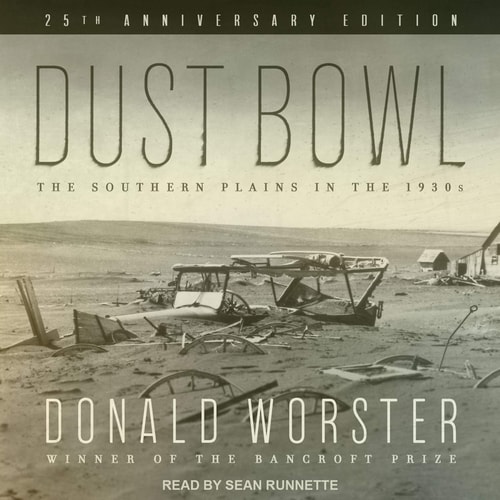
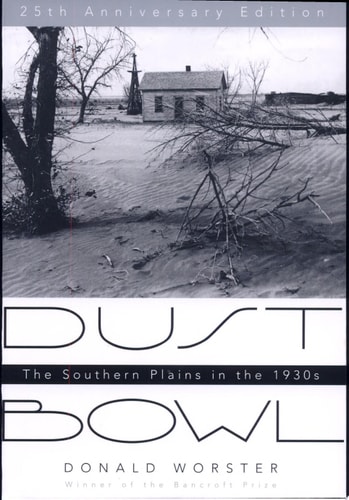
In the mid 1930s, North America's Great Plains faced one of the worst man-made environmental disasters in world history. Donald Worster's classic chronicle of the devastating years between 1929 and 1939 tells the story of the Dust Bowl in ecological as well as human terms.Now, twenty-five years after his book helped to define the new field of environmental history, Worster shares his more recent thoughts on the subject of the land and how humans interact with it. In a new afterword, he links the Dust Bowl to current political, economic and ecological issues--including the American livestock industry's exploitation of the Great Plains, and the on-going problem of desertification, which has now become a global phenomenon. He reflects on the state of the plains today and the threat of a new dustbowl. He outlines some solutions that have been proposed, such as "the Buffalo Commons," where deer, antelope, bison and elk would once more roam freely, and suggests that we may yet witness a Great Plains where native flora and fauna flourish while applied ecologists show farmers how to raise food on land modeled after the natural prairies that once existed.
Menrva's Summary
THE THESIS
Donald Worster investigates the Dust Bowl as a man-made environmental catastrophe, arguing that the disaster was the inevitable result of a capitalist agricultural system that prioritized short-term profit over ecological stability. Worster, a prominent environmental historian, utilizes extensive archival research and economic analysis to demonstrate how the transformation of the Great Plains into a commercialized commodity led to the collapse of the region's natural resilience. He posits that the 1930s crisis serves as a foundational case study for understanding the long-term consequences of human exploitation of fragile ecosystems.
THE SCOPE MAP
What You Will Find
- A detailed historical account of the Great Plains between 1929 and 1939.
- An analysis of the intersection between industrial livestock production and environmental degradation.
- A critical examination of desertification as a contemporary global phenomenon.
- Theoretical proposals for land restoration, including the concept of the Buffalo Commons.
THE AUTHORITY PERSPECTIVE
Experts recognize this work as a foundational text that helped establish the field of environmental history. Readers frequently note the academic rigor of the prose and the author's ability to connect historical agricultural practices to modern ecological challenges.
Page Count:
288
Publication Date:
1979-01-01
Publisher:
Oxford University Press
ISBN-10:
0195025504
ISBN-13:
9780195025507
History
Environmental History
Dust Storms
United States
Ecology
Agriculture
American History
Community Tags
Other Editions(5)

Similar Books





Reader Comments
Share Your Thoughts
No comments yet. Be the first to share your thoughts!