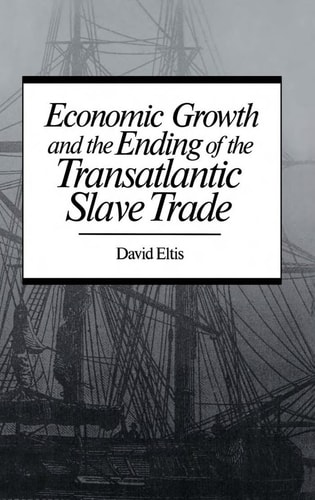
Economic Growth and the Ending of the Transatlantic Slave Trade
0
0
As an Amazon Associate and affiliate partner, Menrva Books earns from qualifying purchases. Learn more
Author Description
This watershed study is the first to consider in concrete terms the consequences of Britain's abolition of the Atlantic slave trade. Why did Britain pull out of the slave trade just when it was becoming important for the world economy and the demand for labor around the world was high? Caught between the incentives offered by the world economy for continuing trade at full tilt and the ideological and political pressures from its domestic abolitionist movement, Britain chose to withdraw, believing, in part, that freed slaves would work for low pay which in turn would lead to greater and cheaper products. In a provocative new thesis, historian David Eltis here contends that this move did not bolster the British economy; rather, it vastly hindered economic expansion as the empire's control of the slave trade and its great reliance on slave labor had played a major role in its rise to world economic dominance. Thus, for sixty years after Britain pulled out, the slave economies of Africa and the Americas flourished and these powers became the dominant exporters in many markets formerly controlled by Britain. Addressing still-volatile issues arising from the clash between economic and ideological goals, this global study illustrates how British abolitionism changed the tide of economic and human history on three continents.
Menrva's Summary
THE THESIS
This study investigates the economic consequences of Britain's decision to abolish the Atlantic slave trade during a period of global economic expansion. Historian David Eltis examines the tension between domestic abolitionist ideology and the prevailing economic incentives of the nineteenth century. By analyzing trade data and imperial policy, Eltis argues that the withdrawal from the slave trade hindered British economic dominance rather than bolstering it, as other nations capitalized on the vacuum left by the British exit.
THE SCOPE MAP
What You Will Find
- Analysis of British economic policy regarding the Atlantic slave trade between 1807 and the mid-nineteenth century.
- Comparative study of slave economies in Africa and the Americas following British withdrawal.
- Quantitative assessment of global labor demand and export market shifts.
- Examination of the conflict between humanitarian ideology and industrial economic growth.
THE AUTHORITY PERSPECTIVE
Historians and economists recognize this work as a significant contribution to the study of the Atlantic slave trade and its economic aftermath. The text is noted for its rigorous use of historical data to challenge traditional narratives regarding the economic impact of abolitionism.
Page Count:
434
Publication Date:
1987-06-11
Publisher:
Oxford University Press
ISBN-10:
0195041356
ISBN-13:
9780195041354
Economics
History
Slavery
Slave Trade
British History
Atlantic History
Community Tags
Other Editions(4)
Similar Books












Reader Comments
Share Your Thoughts
No comments yet. Be the first to share your thoughts!