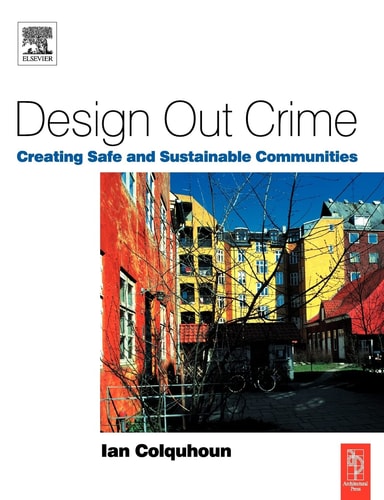
Design Out Crime: Creating Safe and Sustainable Communities
0
0
As an Amazon Associate and affiliate partner, Menrva Books earns from qualifying purchases. Learn more
Author Description
Here is a book about the practical design of communities and housing in which people can enjoy a good quality of life, free from crime and fear of crime.Recognising that crime, vandalism and anti-social behaviour are issues of high public concern, and that the driving forces behind crime are numerous, this book argues that good design can help tackle many of these issues. It shows how, through integrating simple crime prevention principles in the design process, it is possible, almost without notice, to make residential environments much safer.Written from the perspective of an architect and town planner, this book offers practical design guidelines through a set of accessible case studies drawn from the UK, USA, The Netherlands and Scandinavia. Each example illustrates how success comes when design solutions reflect local characteristics and where communities are truly sustainable; where residents feel they belong, and where crime is dealt with as part of the bigger picture of urban design.
Menrva's Summary
THE THESIS
This book argues that thoughtful community and housing design can significantly reduce crime and the fear of crime. Ian Colquhoun, an architect and town planner, presents a compelling case for integrating crime prevention principles directly into the design process. The book posits that by making environments safer almost imperceptibly, we can enhance the quality of life for residents. It explores how design solutions, when tailored to local characteristics and fostering a sense of community belonging, contribute to sustainable urban environments where crime is addressed holistically.
THE SCOPE MAP
- Practical design guidelines for crime prevention in communities and housing.
- Accessible case studies from the UK, USA, The Netherlands, and Scandinavia.
- Integration of crime prevention principles into the urban design process.
- Focus on creating sustainable residential environments that foster a sense of belonging.
- Addressing crime as an integral part of the broader urban design picture.
THE AUTHORITY PERSPECTIVE
The book is presented as a practical guide for architects and town planners, offering actionable insights into creating safer communities through design. It emphasizes a holistic approach, integrating crime prevention with sustainability and community well-being. The inclusion of diverse case studies suggests a focus on real-world application and the adaptability of design principles across different cultural and geographical contexts. The framing implies that effective design can proactively mitigate crime without overtly securitizing environments.
Page Count:
325
Publication Date:
2004-01-01
Publisher:
Routledge
ISBN-10:
0750654929
ISBN-13:
9780750654920
Architecture
Crime
Non-Fiction
Sustainability
urban planning
Criminology
Community Development
Community Tags
Similar Books