Foundations of the Neuron Doctrine
0
0
As an Amazon Associate and affiliate partner, Menrva Books earns from qualifying purchases. Learn more
Author Description
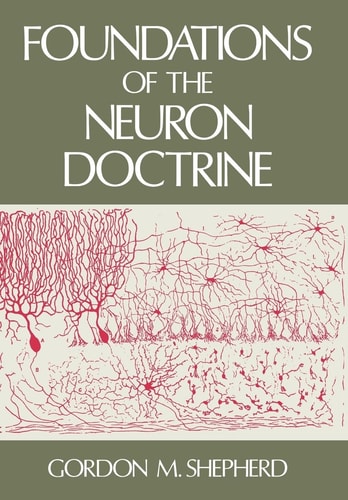
For a century, the neuron doctrine has been the basis for our concepts of nervous organization and brain function. Formulated in 1891 by Wilhelm Waldeyer, it stated that the cell theory applies to the nervous system. Santiago Ramon y Cajal, Spain's greatest scientist, was its main architect; his main tool was a capricious nerve cell stain discovered by Camillo Golgi. This book reviews the original papers on which the neuron doctrine was based, showing that the evidence came from a much wider base of contributions than is generally realized, including such diverse and brilliant personalities as Albrecht Kolliker, Sigmund Freud, Wilhelm His, August Forel, Fritdjof Nansen and Gustav Retzius. Furthermore, many questions about terminology of the parts of the neuron and about the organization of neurons into reflex pathways and networks were raised and debated, questions that remain relevant to this day. Electron microscopical studies in the 1950s appeared to confirm the classical doctrine, but subsequent studies have revealed complexities that were not anticipated. This book reviews these new studies against the background of the classical work, and suggests some new directions for revising our concept of the neuron as a basis for the functional organization of the nervous system.
Menrva's Summary
THE THESIS
This book investigates the historical origins and subsequent evolution of the neuron doctrine, questioning whether the classical cell theory of the nervous system remains sufficient in light of modern neuroscientific discoveries. Gordon M. Shepherd, a distinguished neuroscientist, synthesizes primary source material from the late 19th century to evaluate the contributions of key figures like Santiago Ramon y Cajal and Camillo Golgi. The text argues that the doctrine was built upon a broader collaborative foundation than traditionally acknowledged and posits that contemporary electron microscopy necessitates a revision of our functional understanding of neural organization.
THE SCOPE MAP
What You Will Find
- Historical analysis of the 1891 formulation of the neuron doctrine by Wilhelm Waldeyer.
- Detailed review of original papers from foundational figures including Freud, Nansen, and Retzius.
- Comparative study between classical 19th-century observations and 1950s electron microscopy data.
- Theoretical framework for updating the concept of the neuron within modern reflex pathways and networks.
THE AUTHORITY PERSPECTIVE
Experts recognize this work as a critical historical resource that bridges the gap between classical neuroanatomy and modern cellular biology. Readers frequently note the academic density of the prose, which serves as a rigorous examination of the field's foundational literature.
Page Count:
352
Publication Date:
1991-11-07
Publisher:
Oxford University Press
ISBN-10:
0195064917
ISBN-13:
9780195064919
History
Science
MEDICAL History
Neuroanatomy
Neurons
Neuroscience
Biology