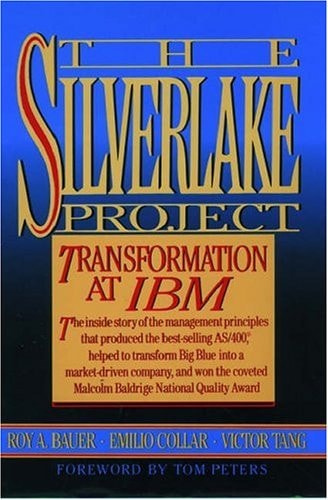
The Silverlake Project: Transformation at IBM
0
0
As an Amazon Associate and affiliate partner, Menrva Books earns from qualifying purchases. Learn more
Author Description
By the mid-1980s, IBM's leadership in computers was under siege, and in fact one of its most respected sites, IBM Rochester (in Minnesota), was in deep trouble. The birthplace of the IBM System/3 and many other profitable mid-range computers, Rochester had become dazzled by its own technological prowess, producing one sophisticated, elegant machine after another. But then it lost touch with its market. The result was disastrous. Rochester's market share of mid-range computers plummeted. But rather than lay down and die, Rochester initiated the most radical cultural change in IBM's history, switching from a product-driven to a market-driven approach to doing business, and set up the Silverlake Project to create a new mid-range computer, the AS/400. It turned out to be a remarkable success. In two short years, the AS/400 was developed, tested, manufactured and launched--an amazing feat in itself--and then it sold more than 25,000 machines worldwide in the first four months on the market. It was the most successful start of any product in the company's history, and continues to be a worldwide success after three years.Now, in The Silverlake Project, three of the major figures behind the AS/400--Roy Bauer, Emilio Collar, and Victor Tang--recount the entire history of Silverlake and the AS/400, a key project that would help win the prestigious Malcolm Baldridge National Quality Award for the Rochester Plant. They describe how engineer and programmer Pete Hansen set up the skunk works that would develop the AS/400, how Tom Furey, an outsider from the East Coast, took charge of the development lab and fashioned IBM Rochester into the corporate exemplar of a market-driven enterprise. But most important, the authors outline twelve marketing principles behind this remarkable success. They discuss how to bring customers in at the very beginning, how to select strategic alliances, how to target markets, how to prioritize a strategic decision, how to launch a new product creativ
Menrva's Summary
THE THESIS
How can a legacy technology firm pivot from a product-centric culture to a market-driven model to regain its competitive edge? The authors, who were key participants in the IBM Rochester transformation, document the internal shift required to develop the AS/400 computer system. By analyzing the transition from engineering-led design to customer-focused development, the text provides a framework for organizational change and strategic product management within a large-scale corporate environment.
THE SCOPE MAP
What You Will Find
- A detailed account of the IBM Rochester plant's cultural and operational transformation during the mid-1980s.
- Twelve specific marketing principles applied to the development and launch of the AS/400.
- Case study analysis of the 'skunk works' methodology used to accelerate product development.
- Strategic insights into managing alliances, prioritizing decisions, and executing a successful product launch.
THE AUTHORITY PERSPECTIVE
Experts and business historians frequently cite this work as a primary source for understanding the internal mechanics of IBM's mid-range computer division during a critical period of market decline. Readers often note the practical utility of the twelve marketing principles as a template for corporate restructuring and product-market alignment.
Page Count:
240
Publication Date:
1992-04-02
Publisher:
Oxford University Press
ISBN-10:
0195067541
ISBN-13:
9780195067545
Business
Technology
Marketing
International business
New Products
Corporate History
Management
Community Tags
Similar Books













Reader Comments
Share Your Thoughts
No comments yet. Be the first to share your thoughts!