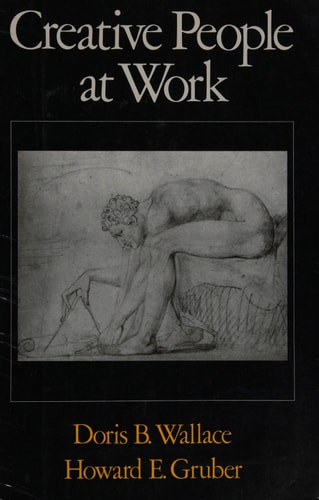
Creative People at Work: Twelve Cognitive Case Studies
0
0
As an Amazon Associate and affiliate partner, Menrva Books earns from qualifying purchases. Learn more
Author Description
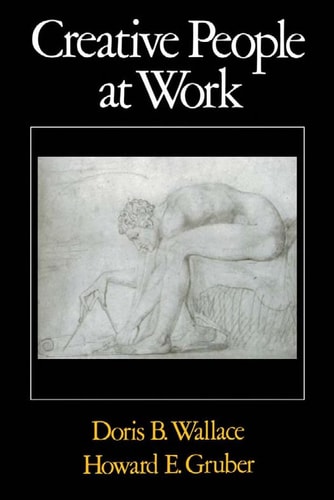
To demystify creative work without reducing it to simplistic formulas, Doris Wallace and Howard Gruber, one of the world's foremost authorities on creativity, have produced a unique book exploring the creative process in the arts and sciences. The book's original "evolving systems approach" treats creativity as purposeful work and integrates cognitive, emotional, aesthetic, and motivational aspects of the creative process. Twelve revealing case studies explore the work of such diverse people as William Wordsworth, Albert Einstein, Jean Piaget, Anais Nin, and Charles Darwin. The case study approach is discussed in relation to other methods such as biography, autobiography, and psychobiology. Emphasis is given to the uniqueness of each creative person; the social nature of creative work is also treated without losing the sense of the individual. A final chapter considers the relationship between creativity and morality in the nuclear age. In addition to developmental psychologists and cognitive scientists, this study offers fascinating insights for all readers interested in the history of ideas, scientific discovery, artistic innovation, and the interplay of intuition, inspiration, and purposeful work.
Menrva's Summary
THE THESIS
This book investigates the nature of the creative process by examining how purposeful work, cognitive systems, and emotional motivation intersect in the lives of high-achieving individuals. Doris B. Wallace and Howard E. Gruber, recognized experts in the field of creativity, utilize an "evolving systems approach" to move beyond reductionist formulas. By analyzing the lives of twelve notable figures, they argue that creativity is a complex, multi-faceted endeavor that integrates aesthetic, motivational, and cognitive dimensions within a social context.
THE SCOPE MAP
What You Will Find
- Twelve detailed case studies of historical figures including William Wordsworth, Albert Einstein, and Charles Darwin.
- The "evolving systems approach" methodology for analyzing creative development.
- Comparative analysis of biographical, autobiographical, and psychobiological research methods.
- Exploration of the intersection between individual creative output and moral responsibility in the modern era.
THE AUTHORITY PERSPECTIVE
Experts recognize this work as a foundational text for understanding the cognitive and developmental aspects of creative labor. Readers frequently note the academic density of the prose, which provides a rigorous framework for those interested in the history of scientific and artistic innovation.
Page Count:
320
Publication Date:
1992-06-25
Publisher:
Oxford University Press
ISBN-10:
0195077180
ISBN-13:
9780195077186
Biography
Psychology
History of Ideas
Creativity