
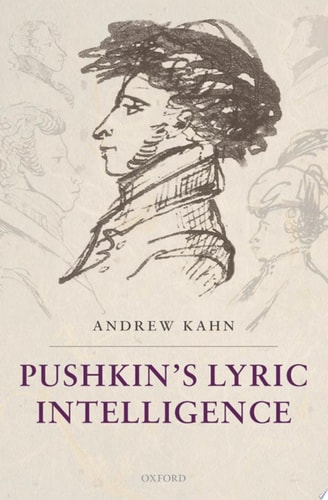
Pushkin's Lyric Intelligence
0
0
As an Amazon Associate and affiliate partner, Menrva Books earns from qualifying purchases. Learn more
Author Description
Alexander Pushkin (1799-1837) Is Russia's Greatest Poet, A 'founding Father' Of Modern Russian Literature, And A Major Figure In World Literature. His Poetry And Prose Changed The Course Of Russian Culture, And His Works Inspired Operas By Musorgsky And Tchaikovsky (as Well As Peter Shaffer's Amadeus). Ceaselessly Experimental, He Is The Author Of The Greatest Body Of Lyric Poetry In The Language; A Remarkable Novelist In Verse, And A Pioneer Of Russian Prose Fiction; An Innovator In Psychological And Historical Drama; And An Amateur Historian Of Serious Purpose. Like Byron, Whose Writing And Personality Were An Inspiration To Him, Pushkin Had A Sensational Life, The Stuff Of Romantic Legend. His Writing Treats All The Most Important Themes That Great Literature Can Addresss-the Nature Of Identity, Love And Betrayal, Independence And Creativity, Nature, The Meaning Of Life, Death And The Afterlife-in An Elegant Style And Highly Personal Voice. Lyric Intelligence Refers To Pushkin's Capacity To Transform Philosophical And Aesthetic Ideas Into Poetry. Arguing That Pushkin's Poetry Has Often Been Misunderstood As Transparently Simple, This First Major Study Of This Substantial Body Of Work Traces The Interrelation Between His Writing And The Influences Of English And European Literature And Cultural Movements On His Understanding Of The Creative Process And The Aims Of Art. Andrew Kahn Approaches Pushkin's Poetic Texts Through The History Of Ideas, And Argues That In His Poetry The Clashes That Matter Are Not About Stylistic Innovation And Genre, As Has Often Been Suggested. Instead The Poems Are Shown To Articulate A Range Of Positions On Key Topics Of The Period, Including The Meaning Of Originality, The Imagination, The Status Of The Poet, The Role Of Commercial Success, The Definition Of Genius, Represenation Of Nature, The Definition Of The Hero, And The Immortality Of The Soul. Drawing On An Extensive Knowledge Of Pushkin's Library And His Intellectual Context, P
Menrva's Summary
THE THESIS
This study investigates the core question of how Alexander Pushkin transformed complex philosophical and aesthetic concepts into his lyric poetry, challenging the common perception that his work is merely transparent or simple. Andrew Kahn, a scholar of Russian literature, utilizes an extensive analysis of Pushkin's personal library and the intellectual climate of the 19th century to construct his argument. He posits that Pushkin's poetry functions as a sophisticated vehicle for debating the period's most pressing cultural and existential questions, rather than serving solely as an exercise in stylistic innovation. By situating the poet within the broader context of European intellectual history, Kahn demonstrates how Pushkin engaged with the creative process and the definition of art.
THE SCOPE MAP
What You Will Find
- Analysis of Pushkin's engagement with English and European literary movements
- Examination of key themes including originality, the imagination, and the status of the poet
- Evaluation of Pushkin's intellectual development through his personal library
- Discussion of the poet's role in the commercial and cultural landscape of his time
Scope Limits
- Does not provide a comprehensive biography of Pushkin's personal life or romantic scandals
- Focuses primarily on the intellectual and philosophical underpinnings of the poetry rather than a line-by-line linguistic analysis of every work
THE AUTHORITY PERSPECTIVE
Experts recognize this work as a significant contribution to the study of Russian literature, specifically for its departure from traditional stylistic readings of Pushkin. Scholars frequently note the academic density of the prose, which is intended for those with a strong background in literary theory and 19th-century European intellectual history.
Page Count:
416
Publication Date:
2008-01-01
Publisher:
Oup Oxford
ISBN-10:
0191552933
ISBN-13:
9780191552939
Biography
Poetry
Literary Criticism
Russian
History of Ideas
Community Tags
Other Editions(3)
Similar Books


Reader Comments
Share Your Thoughts
No comments yet. Be the first to share your thoughts!