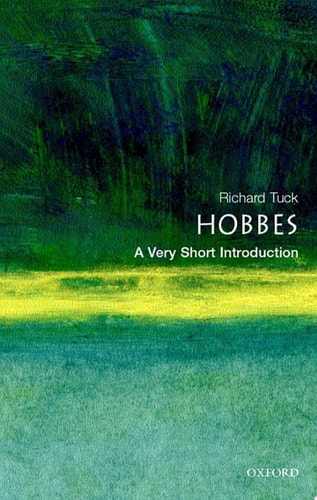
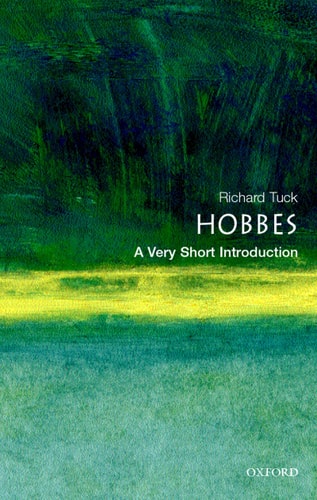
Hobbes: A Very Short Introduction
0
0
As an Amazon Associate and affiliate partner, Menrva Books earns from qualifying purchases. Learn more
Author Description
Thomas Hobbes, the first great English political philosopher, has long had the reputation of being a pessimistic atheist, who saw human nature as inevitably evil and proposed a totalitarian state to subdue human failings. In this illuminating study, Richard Tuck re-evaluates Hobbes's philosophy and dispels these myths, revealing him to have been passionately concerned with the refutation of scepticism, and to have developed a theory of knowledge which rivalled that of Descartes in its importance. ABOUT THE SERIES: The Very Short Introductions series from Oxford University Press contains hundreds of titles in almost every subject area. These pocket-sized books are the perfect way to get ahead in a new subject quickly. Our expert authors combine facts, analysis, perspective, new ideas, and enthusiasm to make interesting and challenging topics highly readable.
Menrva's Summary
THE THESIS
This book investigates the core philosophical contributions of Thomas Hobbes, challenging the common perception of him as a pessimistic advocate for totalitarianism. Richard Tuck, a scholar of political thought, utilizes historical context and textual analysis to re-examine Hobbes's work. He argues that Hobbes was primarily concerned with refuting skepticism and establishing a robust theory of knowledge that stands as a significant counterpart to Cartesian philosophy.
THE SCOPE MAP
What You Will Find
- An overview of Hobbes's political and epistemological theories
- A critical analysis of the historical myths surrounding Hobbes's atheism and pessimism
- A comparison between Hobbesian thought and the work of René Descartes
Scope Limits
- The text does not provide an exhaustive biography of Hobbes's personal life
- The analysis is condensed to fit the format of a brief introductory volume
THE AUTHORITY PERSPECTIVE
Experts and students frequently cite this work as a concise and effective entry point for understanding the complexities of Hobbesian political theory. Readers often note that the prose is accessible while maintaining the academic rigor expected of the Very Short Introductions series.
Page Count:
176
Publication Date:
2002-01-01
Publisher:
OUP Oxford
ISBN-10:
0191604461
ISBN-13:
9780191604461
Biography
Philosophy
History & Surveys
Political Philosophy
History of Ideas
Community Tags
Other Editions(3)
Similar Books