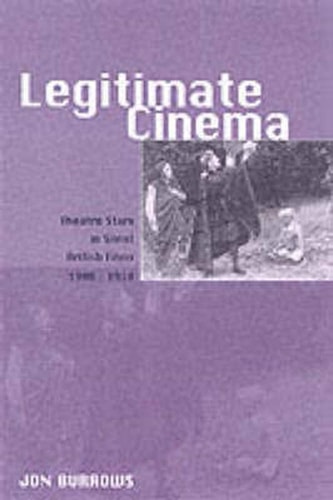
Legitimate Cinema Theatre Stars in Silent British Films, 1908-1918
0
0
As an Amazon Associate and affiliate partner, Menrva Books earns from qualifying purchases. Learn more
Author Description
This is the first new book-length study of British cinema of the 1910s to be published for over fifty years, and it focuses on the close relationship between the British film industry and the Edwardian theatre. Why were so many West End legends such as Sir Herbert Beerbohm Tree and Ellen Terry repeatedly tempted to dabble in silent film work? Why were film producers so keen to employ them? Jon Burrows studies their screen performances and considers how successfully they made the transition from one medium to the other, and offers some controversial conclusions about the surprisingly broad social range of filmgoers to whom their films appealed.
Menrva's Summary
THE THESIS
This book investigates the symbiotic relationship between the Edwardian theatre and the nascent British film industry during a pivotal decade. It examines why prominent West End actors like Sir Herbert Beerbohm Tree and Ellen Terry were drawn to silent film, and why producers actively sought their involvement. The study analyzes their on-screen performances, assessing the challenges and successes of their transition between mediums, and proposes novel insights into the diverse audience demographics their films attracted.
THE SCOPE MAP
- Focus on British cinema of the 1910s, a period largely unexamined in recent scholarship.
- Explores the connection between the film industry and the Edwardian theatre.
- Analyzes the motivations of West End stars in pursuing silent film roles.
- Evaluates the success of theatre actors in adapting to the silent film medium.
- Examines the appeal of these films to a broad spectrum of filmgoers.
- Features prominent figures such as Sir Herbert Beerbohm Tree and Ellen Terry.
- Offers controversial conclusions regarding audience demographics.
THE AUTHORITY PERSPECTIVE
The book is presented as the first new book-length study of British cinema from the 1910s in over fifty years, indicating a significant gap in existing scholarship that it aims to fill. Its focus on the interplay between theatre and film, and its analysis of prominent actors' transitions to the screen, suggests a detailed exploration of a specific historical and cultural moment. The promise of controversial conclusions about audience appeal points to a potentially revisionist or thought-provoking perspective on early cinema's social reach.
Page Count:
278
Publication Date:
2003-01-01
Publisher:
University of Exeter Press
ISBN-10:
0859897257
ISBN-13:
9780859897259
History
Non-Fiction
Film History
Cultural History
British Cinema
Silent Film
Theatre History
Community Tags
Similar Books