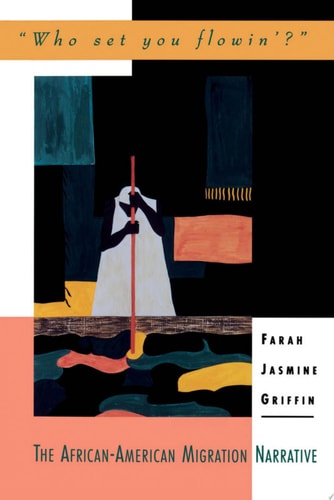
Who Set You Flowin'?: The African-American Migration Narrative
0
0
As an Amazon Associate and affiliate partner, Menrva Books earns from qualifying purchases. Learn more
Author Description
Twentieth-century America has witnessed the most widespread and sustained movement of African-Americans from the South to urban centers in the North. Who Set You Flowin'? examines the impact of this dislocation and urbanization, identifying the resulting Migration Narratives as a major genre in African-American cultural production. Griffin takes an interdisciplinary approach with readings of several literary texts, migrant correspondence, painting, photography, rap music, blues, and rhythm and blues. From these various sources Griffin isolates the tropes of Ancestor, Stranger, and Safe Space, which, though common to all Migration Narratives, vary in their portrayal. She argues that the emergence of a dominant portrayal of these tropes is the product of the historical and political moment, often challenged by alternative portrayals in other texts or artistic forms, as well as intra-textually. Richard Wright's bleak, yet cosmopolitan portraits were countered by Dorothy West's longing for Black Southern communities. Ralph Ellison, while continuing Wright's vision, reexamined the significance of Black Southern culture. Griffin concludes with Toni Morrison embracing the South "as a site of African-American history and culture," "a place to be redeemed."
Menrva's Summary
THE THESIS
This work investigates how the mass migration of African Americans from the South to Northern urban centers during the twentieth century shaped a distinct and enduring genre of cultural production known as the Migration Narrative. Farah Jasmine Griffin, a scholar of African American literature and culture, utilizes an interdisciplinary framework to analyze how this geographic and social dislocation influenced artistic expression. By examining a diverse array of primary sources, she argues that these narratives are not monolithic but are instead defined by the shifting political and historical contexts of their creation.
THE SCOPE MAP
What You Will Find
- Analysis of literary works by authors including Richard Wright, Dorothy West, Ralph Ellison, and Toni Morrison.
- Examination of non-literary cultural artifacts such as migrant correspondence, painting, photography, rap music, and blues.
- Identification of three core thematic tropes: the Ancestor, the Stranger, and the Safe Space.
- A comparative study of how these tropes evolve across different artistic mediums and historical periods.
THE AUTHORITY PERSPECTIVE
Scholars and critics recognize this text as a foundational contribution to the study of African American migration and its influence on the American cultural canon. Readers frequently note the academic rigor and the breadth of the interdisciplinary approach, which effectively bridges the gap between literary analysis and historical sociology.
Page Count:
248
Publication Date:
1995-05-25
Publisher:
Oxford University Press
ISBN-10:
0195088964
ISBN-13:
9780195088960
History
African Americans
Literary Criticism
Sociology
Community Tags
Other Editions(3)
Similar Books