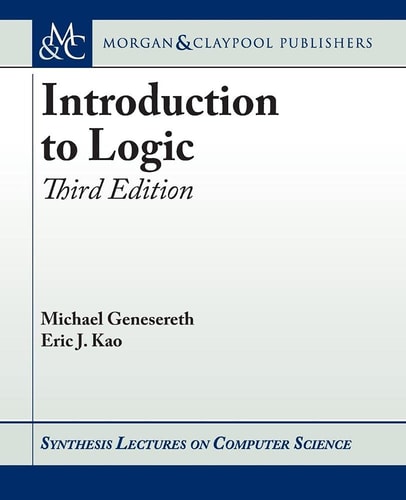
Introduction to Logic
0
0
As an Amazon Associate and affiliate partner, Menrva Books earns from qualifying purchases. Learn more
Author Description
This book is a gentle but rigorous introduction to Formal Logic. It is intended primarily for use at the college level. However, it can also be used for advanced secondary school students, and it can be used at the start of graduate school for those who have not yet seen the material. The approach to teaching logic used here emerged from more than 20 years of teaching logic to students at Stanford University and from teaching logic to tens of thousands of others via online courses on the World Wide Web. The approach differs from that taken by other books in logic in two essential ways, one having to do with content, the other with form. Like many other books on logic, this one covers logical syntax and semantics and proof theory plus induction. However, unlike other books, this book begins with Herbrand semantics rather than the more traditional Tarskian semantics. This approach makes the material considerably easier for students to understand and leaves them with a deeper understanding of what logic is all about. In addition to this text, there are online exercises (with automated grading), online logic tools and applications, online videos of lectures, and an online forum for discussion. They are available at http: //intrologic.stanford.edu/
Menrva's Summary
THE THESIS
This book provides a rigorous yet accessible introduction to Formal Logic, designed for college-level students and beyond. Developed from over two decades of teaching experience at Stanford University and through extensive online courses, the text presents a unique approach to logic. It begins with Herbrand semantics instead of the more traditional Tarskian semantics, aiming to enhance student comprehension and provide a deeper understanding of the subject's core principles.
THE SCOPE MAP
- Coverage of logical syntax, semantics, and proof theory, including induction.
- An introduction to logic beginning with Herbrand semantics, differing from traditional Tarskian semantics.
- Content designed for college-level students, adaptable for advanced secondary school and introductory graduate levels.
- Integration with online resources including exercises, tools, lecture videos, and a discussion forum.
THE AUTHORITY PERSPECTIVE
The approach to teaching logic used in this book, developed over 20 years of experience at Stanford and through online courses, aims to provide a gentler yet rigorous introduction. By beginning with Herbrand semantics rather than Tarskian semantics, the authors intend to make the material more accessible and foster a deeper understanding of logic. The accompanying online resources, including exercises, tools, and discussion forums, further support this pedagogical goal.
Page Count:
177
Publication Date:
2016-11-07
Publisher:
Morgan & Claypool Publishers
ISBN-10:
162705636X
ISBN-13:
9781627056366
Science
Philosophy
Non-Fiction
Formal Logic
Computer Science
Education
Logic
Community Tags
Similar Books