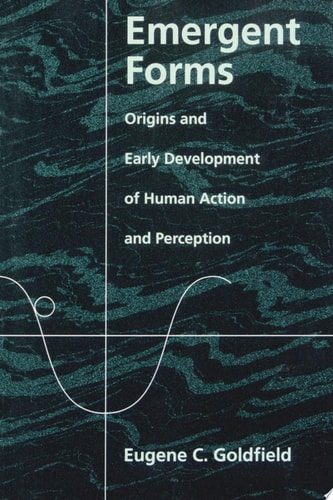
Emergent Forms: Origins and Early Development of Human Action and Perception
0
0
As an Amazon Associate and affiliate partner, Menrva Books earns from qualifying purchases. Learn more
Author Description
While it is often assumed that behavioral development must be based upon both physical law and the biological principles of morphogenesis and selection, forging a link between these phenomena has remained an elusive goal. Now in Emergent Forms, psychologist Eugene C. Goldfield offers an exciting new theoretical framework--based, in part, on the concept of self-organization--that promises to aid researchers in their quest to discover the underlying origins and processes of behavioral development. Addressing the question of how familiar human functional acts--such as eating, walking, manipulating objects, and smiling--emerge during infancy, Goldfield proposes that during perceptually guided spontaneous activity a variety of biodynamic devices for doing different kinds of work are assembled and adapted to specific tasks. Throughout, the theory is examined in the context of development, and extended to atypical development and other domains, such as cognition and language. The author also addresses many long-standing issues in behavioral development, including the apparent disappearance of so-called primitive behaviors, the emergence of new skills, and the role of the caregiver in skill acquisition. The author concludes his work by discussing how the implications of this research can be applied to understanding abnormal development in children who are motor impaired. Interdisciplinary in scope and accessible to a broad range of readers, Emergent Forms will fascinate students and researchers of ecological, developmental, evolutionary, and cognitive psychology.
Menrva's Summary
THE THESIS
How do complex human behaviors, such as walking or object manipulation, emerge from the interaction of physical laws and biological morphogenesis during infancy? Eugene C. Goldfield, a researcher in developmental psychology, synthesizes principles of self-organization and biodynamics to propose a new theoretical framework for behavioral development. By examining how spontaneous activity leads to the assembly of functional motor skills, he provides a model that bridges the gap between physical constraints and adaptive behavior. The work serves as a comprehensive inquiry into the mechanisms of skill acquisition and the role of environmental factors in early development.
THE SCOPE MAP
What You Will Find
- A theoretical framework based on self-organization and biodynamic systems.
- Analysis of infant motor behaviors including eating, walking, and object manipulation.
- Examination of atypical development and motor impairment in children.
- Discussion on the role of caregivers in the process of skill acquisition.
THE AUTHORITY PERSPECTIVE
Experts recognize this work as a significant contribution to ecological and developmental psychology, particularly for its interdisciplinary approach to motor development. Researchers frequently cite the text for its utility in connecting physical principles to the study of behavioral emergence in infants.
Page Count:
384
Publication Date:
1995-05-11
Publisher:
Oxford University Press
ISBN-10:
0195095022
ISBN-13:
9780195095029
Psychology
Behavioral Science
Developmental Psychology
Community Tags
Similar Books