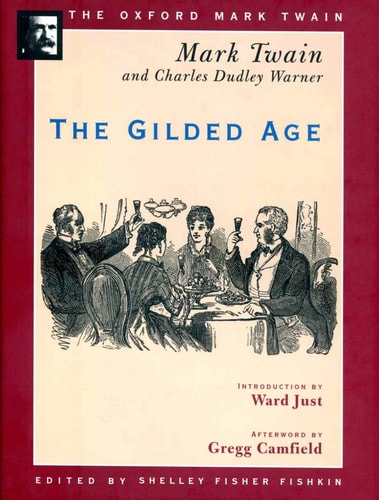
The Gilded Age
0
0
As an Amazon Associate and affiliate partner, Menrva Books earns from qualifying purchases. Learn more
Author Description
The Gilded Age, by Mark Twain and Charles Dudley Warner, is a political roman à clef--a direct and caustic attack on government, politicians, and big business in Post-Civil War America. It is the book that gave an era its name. Published in 1873, the first year of the second scandal-ridden Grant administration, it is the first novel of consequence about Washington in all of American writing, as Ward Just notes in his Introduction. The Gilded Age "gives Washington the aspect of a clumsy frontier town of ludicrous aspirations, populated mainly by fools, racketeers, opportunists, and parvenus, most of them members of the United States Congress," Just writes. The Gilded Age trains its satire on corruption in politics, business and the courts; "As Twain famously said, there is no distinctly native American criminal class except Congress, and the great triumph of The Gilded Age is that we are given chapter and verse on how the thievery is done." Just notes that readers will see for themselves whether Twain and Warner's subtitle for The Gilded Age--"A Tale of To-Day"--is still accurate.
Menrva's Summary
THE PULSE
The novel centers on the pervasive corruption and moral decay of post-Civil War America, as various characters seek fortune through political influence and speculative schemes. The narrative follows multiple protagonists, including the idealistic Philip Sterling and the ambitious Colonel Sellers, as they navigate a landscape defined by greed and legislative malpractice. Their objectives are frequently thwarted by the systemic thievery and bureaucratic incompetence inherent in the Washington D.C. of the 1870s. The story employs a sprawling, multi-perspective framework to critique the era's social and economic instability.
INSIDE THE PAGES
- Sharp political satire targeting the Grant administration
- Multi-perspective narrative structure
- Realistic depiction of 19th-century American frontier expansion
- Exploration of the intersection between business and government
- Use of the roman à clef literary device
- Character archetypes representing greed and opportunism
- Detailed commentary on the legislative process
- Historical setting in post-Civil War Washington D.C.
THE COLLECTIVE ECHO
Readers and critics frequently highlight the book's role as the definitive critique of the era that gave the Gilded Age its name. Discussion often centers on the effectiveness of the collaboration between Twain and Warner in balancing biting satire with a narrative of American ambition. While some readers find the pacing uneven due to its sprawling cast, most acknowledge the work's historical significance as a foundational text in American political fiction. Scholars often point to the novel's enduring relevance, noting that its observations on political corruption remain a frequent subject of modern analysis.
Page Count:
720
Publication Date:
1996-12-05
Publisher:
Oxford University Press
ISBN-10:
0195101340
ISBN-13:
9780195101348
Satire
Washington DC
American
Historical
Fiction political
classic
Political
Community Tags
Other Editions(11)

Independently Published
2019
Default edition
Creative Media Partners, LLC
2018
Independently Published
2018
CreateSpace Independent Publishing Platform
2017
Mission Audio
2015
Creative Media Partners, LLC
2015
CreateSpace Independent Publishing Platform
2014
Jazzybee Verlag
2014
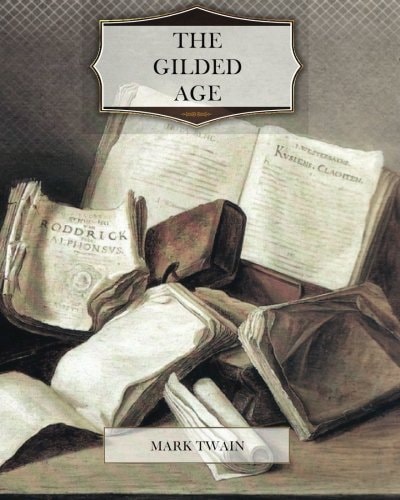
CreateSpace Independent Publishing Platform
2012
Kessinger Publishing
2004
Oxford University Press
1996
Similar Books



Reader Comments
Share Your Thoughts
No comments yet. Be the first to share your thoughts!