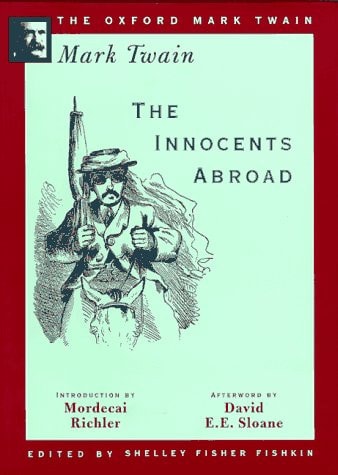
The Innocents Abroad
0
0
As an Amazon Associate and affiliate partner, Menrva Books earns from qualifying purchases. Learn more
Author Description
In 1867, Mark Twain set out from New York City for Europe and the Holy Land on the paddle-steamer Quaker City. The result of that trip was The Innocents Abroad, a travel book unlike any that had gone before it. Irreverent and irrepressible, Twain pokes fun at officious tour guides and offensive tourists alike. The book offers a glimpse of a major writer when he was young and just beginning to flex his muscles, and also serves as an enduring no-nonsense guide for the first-time traveler to Europe and the Holy Land. The trip stimulates Twain to meditate on how the "new world" is different from the "old" and engenders reflections on what a society must be like to be thought of as genuinely "civilized." The Innocents Abroad is alternately profound and profoundly entertaining. Twain may find himself exasperated or exhausted--but the story he tells is never dull. It is no wonder that the book was a hit on both sides of the Atlantic.
Menrva's Summary
THE THESIS
This work investigates the cultural friction between the burgeoning American identity and the established traditions of the Old World through the lens of a nineteenth-century excursion. Mark Twain, writing as a correspondent, utilizes his experiences aboard the Quaker City to challenge the romanticized notions of European and Holy Land travel prevalent in his era. By contrasting the expectations of his fellow travelers with the reality of the sites they visit, he constructs a critical framework that questions the definition of civilization and the authenticity of the tourist experience.
THE SCOPE MAP
What You Will Find
- A detailed account of an 1867 steamship voyage from New York to Europe and the Holy Land.
- Satirical observations on the behavior of American tourists and the artifice of professional tour guides.
- Philosophical reflections on the cultural disparities between the New World and the Old World.
- A foundational example of the American travelogue genre that prioritizes wit and skepticism over reverence.
THE AUTHORITY PERSPECTIVE
Scholars and critics frequently cite this work as a pivotal text in the development of Twain's distinct satirical voice and his early mastery of the travelogue format. Readers often note that while the prose remains accessible, the text serves as a significant historical document regarding nineteenth-century perceptions of global travel.
Page Count:
786
Publication Date:
1996-12-05
Publisher:
Oxford University Press
ISBN-10:
0195101324
ISBN-13:
9780195101324
Non-Fiction
Humor
Travel
Satire
Middle East
Europe
classic
Community Tags
Other Editions(76)
BoD – Books on Demand
2022
Default edition
Repro India Limited
2022
Independently Published
2021
Independently Published
2021

Independently Published
2021

Independently Published
2021
Independently Published
2021
Independently Published
2021
Independently Published
2021

Independently Published
2021

Independently Published
2020

Mint Editions
2020

Amazon Digital Services LLC - KDP Print US
2020
Independently Published
2020
Read Books
2020
Independently Published
2020
Independently Published
2020

Amazon Digital Services LLC - KDP Print US
2020
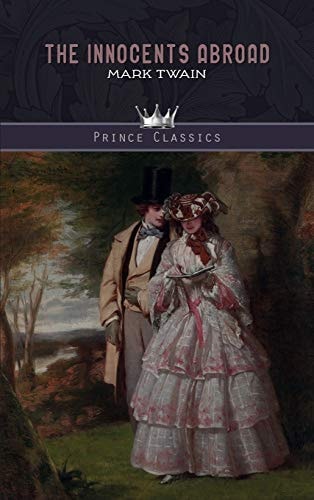
Prince Classics
2020
Independently Published
2020
Independently Published
2019
Independently Published
2019

Independently Published
2019

Amazon Digital Services LLC - KDP Print US
2019

Amazon Digital Services LLC - KDP Print US
2019
Amazon Digital Services LLC - KDP Print US
2019

Amazon Digital Services LLC - KDP Print US
2019

Creative Media Partners, LLC
2018

CreateSpace Independent Publishing Platform
2018
Creative Media Partners, LLC
2018

CreateSpace Independent Publishing Platform
2018

CreateSpace Independent Publishing Platform
2018
CreateSpace Independent Publishing Platform
2018

CreateSpace Independent Publishing Platform
2018
CreateSpace Independent Publishing Platform
2017
CreateSpace Independent Publishing Platform
2017

CreateSpace Independent Publishing Platform
2017

Independently Published
2017
CreateSpace Independent Publishing Platform
2017
Independently Published
2017
Creative Media Partners, LLC
2017

CreateSpace Independent Publishing Platform
2017
CreateSpace Independent Publishing Platform
2017

CreateSpace Independent Publishing Platform
2017

Independently Published
2017

CreateSpace Independent Publishing Platform
2016

CreateSpace Independent Publishing Platform
2016

John Beaufoy Publishing
2016

CreateSpace Independent Publishing Platform
2015
CreateSpace Independent Publishing Platform
2015

CreateSpace Independent Publishing Platform
2015

CreateSpace Independent Publishing Platform
2015
CreateSpace Independent Publishing Platform
2015

CreateSpace Independent Publishing Platform
2014

CreateSpace Independent Publishing Platform
2014
CreateSpace Independent Publishing Platform
2014

CreateSpace Independent Publishing Platform
2014
CreateSpace Independent Publishing Platform
2014
CreateSpace Independent Publishing Platform
2013

Bod Third Party Titles
2013
CreateSpace Independent Publishing Platform
2013

CreateSpace Independent Publishing Platform
2013
CreateSpace Independent Publishing Platform
2012

Independently published
2011
CreateSpace Independent Publishing Platform
2010

Bibliolife
2009
Digireads.com Publishing
2009
Penguin USA, Inc.
2009

Standard Publications, Incorporated
2009
Stanfords
2007

NuVision Publications
2004
Barnes & Noble World Digital Library
2002
Oxford University Press
1996

Century
1988
Books on Tape, Inc.
1986

CreateSpace Independent Publishing Platform
1869
Similar Books

Reader Comments
Share Your Thoughts
No comments yet. Be the first to share your thoughts!