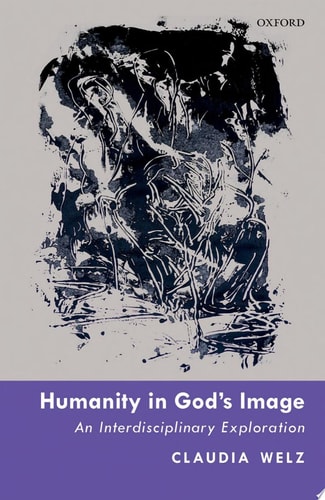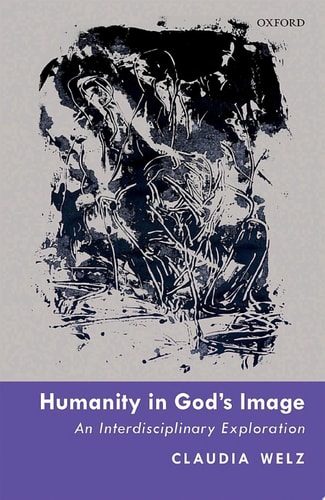
Humanity in God's Image: An Interdisciplinary Exploration
0
0
As an Amazon Associate and affiliate partner, Menrva Books earns from qualifying purchases. Learn more
Author Description
How can we, in our times, understand the biblical concept that human beings have been created in the image of an invisible God? This is a perennial but increasingly pressing question that lies at the heart of theological anthropology. Humanity in God's Image: An Interdisciplinary Exploration clarifies the meaning of this concept, traces different Jewish and Christian interpretations of being created in God's image, and reconsiders the significance of the imago Dei in a post-Holocaust context. As normative, counter-factual notions, human dignity and the imago Dei challenge us to see more. Claudia Welz offers an interdisciplinary exploration of theological and ethical 'visions' of the invisible. By analysing poetry and art, Welz exemplifies human self-understanding in the interface between the visual and the linguistic. The content of the imago Dei cannot be defined apart from the image carrier: an embodied creature. Compared to verbal, visual, and mental images, how does this creature as a 'living image' refer to God--like a metaphor, a mimetic mirror, or an elusive trace? Combining hermeneutical and phenomenological perspectives with philosophy of religion and philosophy of language, semiotics, art history, and literary studies, Welz regards the imago Dei as a complex sign that is at once iconic, indexical, and symbolical--pointing beyond itself.
Menrva's Summary
THE THESIS
This work investigates how the biblical concept of imago Dei, or being created in the image of God, remains a relevant and necessary framework for understanding human dignity in a contemporary, post-Holocaust context. Claudia Welz, a scholar in theology and philosophy, utilizes an interdisciplinary methodology to bridge the gap between theological tradition and modern ethical discourse. By examining the human being as a 'living image,' the author argues that the concept functions as a complex sign that requires an integrated approach involving semiotics, phenomenology, and hermeneutics to fully comprehend its significance.
THE SCOPE MAP
What You Will Find
- A historical analysis of Jewish and Christian interpretations of the imago Dei.
- A semiotic framework categorizing the imago Dei as iconic, indexical, and symbolical.
- An interdisciplinary synthesis of philosophy of religion, art history, and literary theory.
- Explorations of human self-understanding through the lens of poetry and visual art.
Scope Limits
- The text does not provide a singular, definitive theological dogma but rather explores the concept as a multifaceted, evolving sign.
- It does not focus on empirical biological or evolutionary accounts of human origins, prioritizing instead the philosophical and theological dimensions of the human image.
THE AUTHORITY PERSPECTIVE
Scholars and theologians frequently note the high level of academic density and the sophisticated interdisciplinary approach Welz employs to navigate complex philosophical terrain. Experts highlight this text as a significant contribution to theological anthropology that successfully integrates diverse fields of study to address the ethical implications of human dignity.
Page Count:
342
Publication Date:
2016-01-01
Publisher:
OUP Oxford
ISBN-10:
0191087912
ISBN-13:
9780191087912
Religion
Anthropology
Theology
Philosophy of
Art History
Ethics