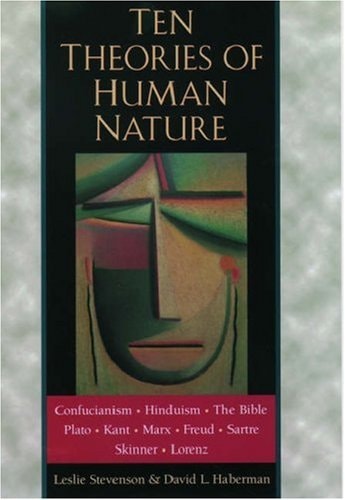
Ten Theories of Human Nature
0
0
As an Amazon Associate and affiliate partner, Menrva Books earns from qualifying purchases. Learn more
Author Description
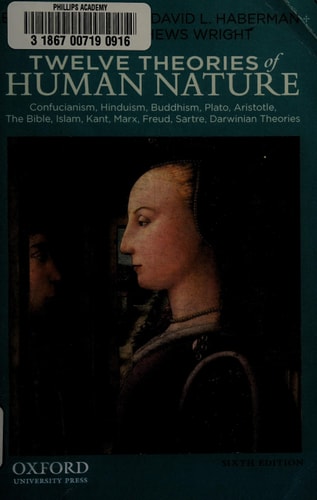
With over a quarter of a million copies sold since 1974, Seven Theories of Human Nature was a remarkably popular introduction to key points of Western thought. Now entitled Ten Theories of Human Nature, this completely revised and expanded third edition broadens the cultural and historical range by incorporating new chapters on Hinduism, Confucianism, and Kant. It also extends and deepens the discussion of the original seven theories, taking into account the most recent scholarship and addressing issues of feminism and relativism. A new final chapter reviews the prospects and limits of the scientific understanding of human nature and includes a survey of nine different types of psychology.This lucid text compresses into a small space the essence of such ancient traditions as Confucianism, Hinduism, and the Old and New Testaments as well as the theories of Plato, Immanuel Kant, Karl Marx, Sigmund Freud, Jean-Paul Sartre, B.F. Skinner, and Konrad Lorenz. The authors juxtapose the ideas of these and other thinkers in a way that helps students understand how humanity has struggled to comprehend its nature. To encourage readers to think critically for themselves, the book examines each theory on four points--the nature of the universe, the nature of humanity, the ills of humanity, and the proposed cure for these ills. Ideal for introductory courses in philosophy, religious studies, human nature, and intellectual history, Ten Theories of Human Nature will engage and motivate students and other readers to consider who we are, what motivates us, and how we can understand and improve the world.
Menrva's Summary
THE THESIS
This book investigates the fundamental question of what constitutes human nature by comparing ten distinct philosophical and religious frameworks. Leslie Stevenson, an established scholar in the field, utilizes a comparative methodology to synthesize complex ideas from Western and Eastern traditions. By evaluating each theory through a consistent four-point analytical lens, the author provides a structured approach for students to navigate the history of human self-understanding.
THE SCOPE MAP
What You Will Find
- Comparative analysis of ten major intellectual traditions including Confucianism, Hinduism, and the works of Kant, Marx, and Freud.
- A standardized four-point evaluation framework covering the nature of the universe, the nature of humanity, human ills, and proposed cures.
- Updated scholarship addressing contemporary issues such as feminism, relativism, and the limits of scientific psychology.
- A comprehensive survey of nine distinct psychological perspectives on human behavior.
THE AUTHORITY PERSPECTIVE
Experts and educators frequently identify this text as a foundational resource for introductory courses in philosophy and intellectual history. Readers often note the clarity of the prose, which successfully condenses dense theoretical material into an accessible format for students.
Page Count:
256
Publication Date:
1998-10-29
Publisher:
Oxford University Press
ISBN-10:
0195120418
ISBN-13:
9780195120417
Psychology
Philosophy
Intellectual History
Philosophical anthropology
Human beings
Human Nature
Community Tags
Similar Books