Factory Production in Nineteenth-Century Britain (Victorian Archives Series)
0
0
As an Amazon Associate and affiliate partner, Menrva Books earns from qualifying purchases. Learn more
Author Description
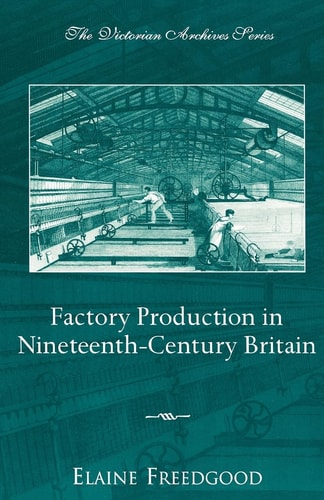
This anthology brings together writings ranging from the canonical to the obscure that suggest the scope of responses--from wondrous celebration to apocalyptic horror--elicited by the advent and establishment of the factory system in nineteenth-century Britain. Addressing complex questions about the possible effects of mass production on human life and labor, this collection presents important works by John Ruskin, Thomas Carlyle, and William Morris alongside lesser-known selections from factory tourists' tales and inspectors' reports, Parliamentary testimony, a Luddite pamphlet, and a cotton mill worker's autobiography. These texts reveal the richness and complexity of the debates, contradictions, and conflicts that accompanied the rise of the factory as the most important site of commodity production. The selections are arranged and introduced in a way that helps students make sense of this complicated field. An introduction by the editor and a chronology of the British factory system help place the materials in their historical context.Ideal for courses in Victorian history, literature, and culture, Factory Production in Nineteenth-Century Britain will also interest students of industrial development and of the history of economics, urbanization, women's work, and childhood.
Menrva's Summary
THE THESIS
This anthology investigates the multifaceted cultural, social, and economic responses to the emergence of the factory system in nineteenth-century Britain. Elaine Freedgood, an expert in Victorian literature and culture, compiles a diverse range of primary source materials to examine how industrialization fundamentally altered human labor and daily life. By juxtaposing canonical literary critiques with raw archival documents, the book provides a comprehensive framework for understanding the tensions between industrial progress and its human costs.
THE SCOPE MAP
What You Will Find
- A curated selection of primary sources including Parliamentary testimony, factory inspectors' reports, and Luddite pamphlets.
- Literary perspectives from prominent figures such as John Ruskin, Thomas Carlyle, and William Morris.
- A detailed chronology of the British factory system to contextualize the provided documents.
- Analytical introductions that bridge the gap between historical data and cultural critique.
THE AUTHORITY PERSPECTIVE
Scholars and educators frequently identify this collection as a foundational resource for interdisciplinary studies in Victorian history and industrial sociology. The text is noted for its ability to balance academic rigor with accessibility, making it a standard reference for students exploring the complexities of the Industrial Revolution.
Page Count:
336
Publication Date:
2002-12-26
Publisher:
Oxford University Press
ISBN-10:
019514872X
ISBN-13:
9780195148725
Economics
History
Labor Studies
Industrial history
Social History
Victorian Era
Community Tags
Similar Books