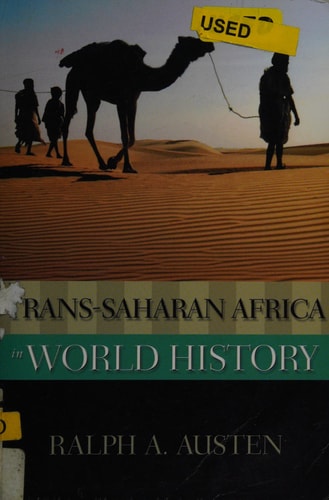
Trans-Saharan Africa in World History
0
0
As an Amazon Associate and affiliate partner, Menrva Books earns from qualifying purchases. Learn more
Author Description
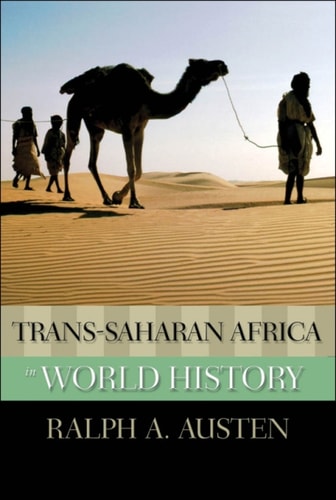
During the heyday of camel caravan traffic--from the eighth century CE arrival of Islam in North Africa to the early twentieth-century building of European colonial railroads that linked the Sudan with the Atlantic--the Sahara was one of the world's great commercial highways, bringing gold, slaves, and other commodities northward and sending both manufactured goods and Mediterranean culture southward into the Sudan. Historian Ralph A. Austen here tells the remarkable story of an African world that grew out of more than one thousand years of trans-Saharan trading. Perhaps the most enduring impact of this trade and the common cultural reference point of trans-Saharan Africa was Islam. Austen traces this faith in its various forms--as a legal system for regulating trade, an inspiration for reformist movements, and a vehicle of literacy and cosmopolitan knowledge. He also analyzes the impact of European overseas expansion, which marginalized trans-Saharan commerce in global terms but stimulated its local growth. Indeed, trans-Saharan culture not only adapted to colonial changes, but often thrived upon them, remaining a potent force into the twenty-first century.
Menrva's Summary
THE THESIS
How did the trans-Saharan trade network shape the economic, religious, and cultural development of Africa over the course of a millennium? Historian Ralph A. Austen examines the Sahara not as a barrier, but as a dynamic commercial highway that facilitated the exchange of goods and ideas between North Africa and the Sudan. By analyzing the intersection of Islamic expansion, indigenous African systems, and the eventual impact of European colonial infrastructure, Austen argues that this region maintained a distinct and resilient cultural identity that persisted well into the modern era.
THE SCOPE MAP
What You Will Find
- Analysis of the trans-Saharan trade routes from the eighth century CE to the early twentieth century.
- Examination of the role of Islam as a legal, literacy, and cultural framework for regional commerce.
- Investigation into the shift from camel caravan traffic to European colonial railroad systems.
- Assessment of how local African cultures adapted to and thrived amidst global economic changes.
THE AUTHORITY PERSPECTIVE
Scholars and students of African history frequently cite this work as a concise and accessible synthesis of a complex regional history. It is widely regarded as a foundational text for understanding the long-term socio-economic integration of the Sahara and the Sudan.
Page Count:
176
Publication Date:
2010-04-19
Publisher:
Oxford University Press
ISBN-10:
0195157311
ISBN-13:
9780195157314
History
Islam
Africa commerce
Middle Eastern
Africa - History
Africa
African history
Trade Routes
World history
Islam africa
Trade
Colonialism