Democracy in America
0
0
As an Amazon Associate and affiliate partner, Menrva Books earns from qualifying purchases. Learn more
Author Description
This work has been selected by scholars as being culturally important, and is part of the knowledge base of civilization as we know it. This work was reproduced from the original artifact, and remains as true to the original work as possible. Therefore, you will see the original copyright references, library stamps (as most of these works have been housed in our most important libraries around the world), and other notations in the work.This work is in the public domain in the United States of America, and possibly other nations. Within the United States, you may freely copy and distribute this work, as no entity (individual or corporate) has a copyright on the body of the work.As a reproduction of a historical artifact, this work may contain missing or blurred pages, poor pictures, errant marks, etc. Scholars believe, and we concur, that this work is important enough to be preserved, reproduced, and made generally available to the public. We appreciate your support of the preservation process, and thank you for being an important part of keeping this knowledge alive and relevant.
Menrva's Summary
THE THESIS
Does the democratic experiment in the United States offer a sustainable model for the future of Western civilization? Alexis de Tocqueville, a French political thinker and historian, conducted an extensive study of the American social and political landscape during the 1830s. His analysis evaluates the strengths and potential pitfalls of equality, examining how the American system balances individual liberty with the pressures of the majority. The work serves as a foundational inquiry into the nature of democratic institutions and their impact on the human condition.
THE SCOPE MAP
What You Will Find
- Comparative analysis of American democratic institutions versus European aristocratic structures
- Observations on the role of civil society, religion, and the press in maintaining a free republic
- Examination of the potential for the 'tyranny of the majority' to stifle individual thought
- Primary source reflections on the social habits, legal systems, and political culture of 19th-century America
THE AUTHORITY PERSPECTIVE
Scholars and political scientists widely regard this text as a foundational analysis of American democracy that remains relevant for understanding modern political behavior. Readers frequently note the academic density of the prose, which requires careful attention to the author's nuanced observations on social equality.
Page Count:
848
Publication Date:
1999-11-01
Publisher:
Oxford University Press, USA
ISBN-10:
0195158466
ISBN-13:
9780195158465
History
Politics
Philosophy
New Used & Rental Textbooks
Government
Sociology
Community Tags
Other Editions(43)

Simon & Schuster
2024
Default edition
Skyhorse Publishing
2024

Independently Published
2020

Independently Published
2019

Simon & Brown
2018

CreateSpace Independent Publishing Platform
2018

CreateSpace Independent Publishing Platform
2018

CreateSpace Independent Publishing Platform
2018

CreateSpace Independent Publishing Platform
2018

CreateSpace Independent Publishing Platform
2017
Dover Publications
2017

CreateSpace Independent Publishing Platform
2016
Baker Publishing Group
2016

CreateSpace Independent Publishing Platform
2016

CreateSpace Independent Publishing Platform
2016
CreateSpace Independent Publishing Platform
2015

CreateSpace Independent Publishing Platform
2014

Simon & Brown
2013

Library of America Paperback Classics
2012

Liberty Fund
2012

CreateSpace Independent Publishing Platform
2010

University of Chicago Press
2010
BiblioLife
2009

Marco Book Company
2009
Penguin USA, Inc.
2009

Barnes & Noble Publishing
2003

Regnery Publishing
2003

Encyclopaedia Britannica
2003

University of Chicago Press
2002
Folio Society
2002

Barnes & Noble World Digital Library
2002
University of Chicago Press
2000
Harper Collins
2000

Oxford Univ Pr (T)
2000

Hackett Pub.
2000
Oxford University Press, USA
1999
Project Gutenberg
1999
Wordsworth Editions
1998

Alfred A. Knopf
1985
Penguin Publishing Group
1956
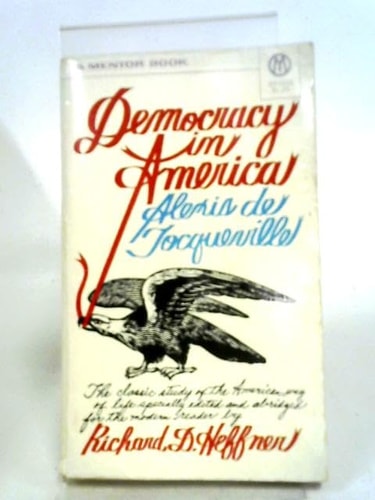
New American Library
1956

Vintage Books
1954
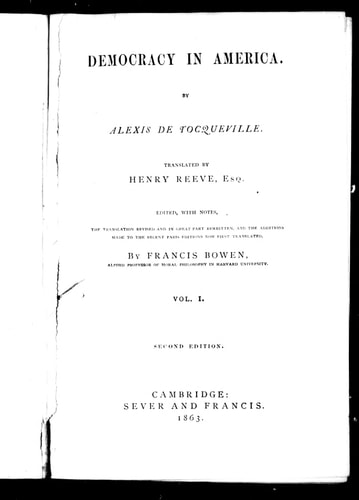
Sever and Francis
1863
Similar Books










Reader Comments
Share Your Thoughts
No comments yet. Be the first to share your thoughts!