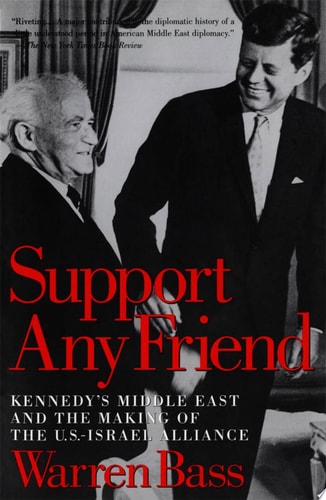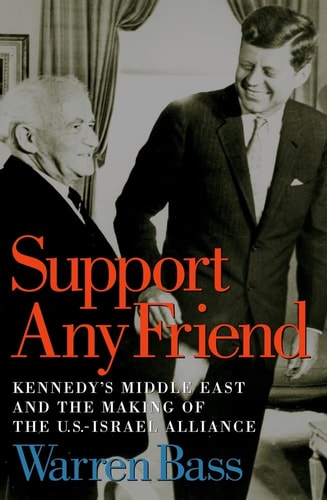
Support Any Friend: Kennedy's Middle East and the Making of the U.S.-Israel Alliance
0
0
As an Amazon Associate and affiliate partner, Menrva Books earns from qualifying purchases. Learn more
Author Description
They were three of the most memorable figures of the twentieth century: David Ben-Gurion, Israel's indomitable founding father; Egyptian President Gamal Abdul Nasser, the charismatic Arab nationalist; and the young and dynamic John F. Kennedy. Now Warren Bass illuminates these three extraordinary men and their diplomatic struggles at the height of the Cold War, offering stunning new insights into the origins of today's Middle East.The Kennedy period, Bass writes, was no "mere place-marker between Suez and the Six Day War, between the martial frostiness of Dwight Eisenhower and the Texas warmth of Lyndon Johnson." He shows how Kennedy sought greater influence in the Arab world, offering more foreign aid and a new diplomatic overture to Nasser, the Arab world's leading radical. For a while, Kennedy and Nasser engaged in a rich personal correspondence. But the rapprochement was cut short by Nasser's impulsive intervention in Yemen's civil war, which led Kennedy to deploy fighter jets in Saudi Arabia as a warning to Egypt. Meanwhile, Kennedy made the first major U.S. arms sale to Israel, providing it with advanced Hawk anti-aircraft missiles--a crucial policy shift that marks the origins of America's alliance with the Jewish state. But Kennedy also feared that Israel would get the bomb and demanded that Ben-Gurion open his secret nuclear reactor to U.S. inspectors, leading to a grave confrontation. Ultimately, Israel agreed to inspections--but continued its nuclear weapons program under the cover of intense secrecy.Drawing on meticulous research, Warren Bass paints a fresh, elegant portrait of the pivotal presidency that helped create the modern Middle East.
Menrva's Summary
THE THESIS
This book investigates the pivotal shift in United States foreign policy toward the Middle East during the Kennedy administration, specifically focusing on the transition from a neutral stance to the foundational alliance with Israel. Warren Bass, a researcher and historian, utilizes declassified documents and personal correspondence to analyze the complex diplomatic triangle between John F. Kennedy, David Ben-Gurion, and Gamal Abdul Nasser. The author argues that this period was not merely a transitional phase but a critical juncture where Cold War imperatives, nuclear non-proliferation concerns, and regional power struggles fundamentally reshaped American strategic interests.
THE SCOPE MAP
What You Will Find
- Detailed analysis of the diplomatic correspondence between John F. Kennedy and Gamal Abdul Nasser.
- Examination of the policy shift regarding the first major U.S. arms sale to Israel, specifically the Hawk anti-aircraft missiles.
- Investigation into the confrontation between the U.S. and Israel over the Dimona nuclear reactor and non-proliferation efforts.
- Historical context regarding the Yemen civil war and its impact on U.S. military posturing in Saudi Arabia.
THE AUTHORITY PERSPECTIVE
Experts and historians frequently cite this work as a definitive account of the Kennedy administration's nuanced and often contradictory approach to Middle Eastern diplomacy. Readers note the high level of archival detail and the author's ability to synthesize complex geopolitical tensions into a coherent historical narrative.
Page Count:
360
Publication Date:
2003-06-05
Publisher:
Oxford University Press
ISBN-10:
0195165802
ISBN-13:
9780195165807
Biography
History
United States
Cold War
Middle East
International relations