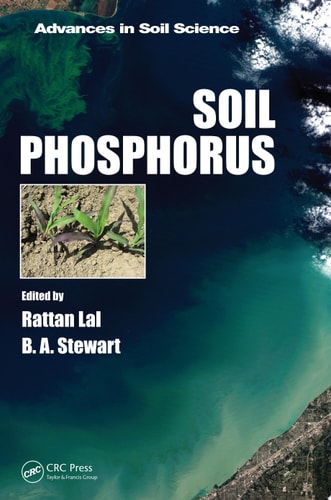
Soil Phosphorus
0
0
As an Amazon Associate and affiliate partner, Menrva Books earns from qualifying purchases. Learn more
Author Description
Phosphorus is an essential plant nutrient, but global population growth has dramatically reduced the availability of phosphorus fertilizer resources. Despite this scarcity, there remain numerous problems associated with the excessive and inappropriate use of phosphorus leading to non-point source pollution and eutrophication of natural waters. Identifying appropriate systems for managing soil phosphorus and reducing the risks of eutrophication are needed to minimize the environmental risks. This book focuses on the availability and recycling of phosphorus; regulatory and policy issues of sustainable phosphorus use; and water quality management in agroecosystems pertaining to phosphorus. Sections are dedicated to global phosphorus reserves; cycling and pathways of phosphorus; phosphorus in agriculture; human dimensions and policy intervention; and research and development priorities. Phosphorus is a finite but crucial resource and is an essential element to all life. Sub-optimal availability and nutrient imbalance in the root zone can adversely impact plant growth, and the quality of food and feed grown on these soils. However, the proven reserves of phosphorus can hardly be adequate for a few centuries only. Yet, its misuse and mismanagement has caused severe problems of eutrophication of water and pollution of the environment. Thus, judicious management of soil phosphorus is essential. This volume is specifically devoted to availability and recycling of phosphorus, regulatory/policy issues of sustainable use of phosphorus, and management in agroecosystems in the context of maximizing the use efficiency and minimizing the environmental risks of water quality.
Menrva's Summary
THE THESIS
The critical challenge of balancing phosphorus's essential role in agriculture with its finite availability and environmental risks. The book addresses the growing global scarcity of phosphorus fertilizer resources, exacerbated by population growth, while simultaneously confronting the detrimental effects of its excessive and inappropriate use, such as non-point source pollution and water eutrophication. It aims to identify appropriate systems for managing soil phosphorus to minimize environmental risks and ensure sustainable use. The authors, B.A. Stewart and Rattan Lal, draw upon their expertise to explore the complex interplay between phosphorus availability, agricultural practices, and water quality management in agroecosystems.
THE SCOPE MAP
- Global phosphorus reserves and their diminishing availability.
- Detailed examination of phosphorus cycling and pathways in various environments.
- The role and management of phosphorus specifically within agricultural systems.
- Human dimensions, including regulatory and policy interventions for sustainable phosphorus use.
- Identification of research and development priorities for phosphorus management.
- Strategies for maximizing phosphorus use efficiency and minimizing environmental risks.
THE AUTHORITY PERSPECTIVE
This volume is a comprehensive examination of phosphorus as a finite but crucial resource, essential for all life. It highlights the dual problems of sub-optimal availability impacting plant growth and food quality, alongside the severe environmental consequences of misuse and mismanagement, such as water eutrophication. The book is dedicated to exploring the availability and recycling of phosphorus, regulatory and policy issues surrounding its sustainable use, and management strategies within agroecosystems to enhance efficiency and mitigate water quality risks. It serves as a vital resource for understanding and addressing the complex challenges associated with soil phosphorus.
Page Count:
351
Publication Date:
2016-09-19
Publisher:
CRC Press
ISBN-10:
1482257858
ISBN-13:
9781482257854
Science
Non-Fiction
Agriculture
Soil Science
Community Tags
Similar Books