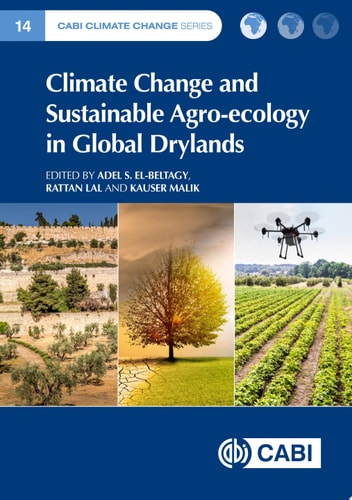
Climate Change and Sustainable Agro-ecology in Global Drylands
0
0
As an Amazon Associate and affiliate partner, Menrva Books earns from qualifying purchases. Learn more
Author Description
Drylands, a home for nearly 2.5 billion people, are highly vulnerable to anthropogenic climate change, and dryland area may expand to 50% of the Earth's surface by 2100. Climate change may aggravate the prevalence of undernutrition and malnutrition because of adverse effects on quantity and quality of food production in these regions. This book takes a holistic approach to sustainable management of drylands to make agriculture drought-resilient. Eminent scientists from around the world share their knowledge and experiences for adaptation and mitigation of the anthropogenic climate change through innovation in sustainable management of water, soil, crops, livestock, and fisheries. They anticipate that climate change will have major impacts on agro- ecosystems which requires continuous dynamic assessments, globally, regionally, and at the local level where the major action of adaptation would have to occur. The assessment will require international cooperation and national capacity-building. This book emphasizes approaches such as smart and precision agriculture, conservation agriculture, and new innovation and technology as tools for adaptation and mitigation. Several chapters are devoted to the human dimensions and policy considerations with emphasis on enhancing coping and adaptive capacity. This book addresses the picture after COP27, including loss and damage, governance and finance. This work will be valuable to students and researchers in agroecology, climate change science and dryland agriculture.
Menrva's Summary
THE THESIS
Drylands, home to nearly 2.5 billion people, face significant threats from climate change, with projections indicating an expansion of dryland areas to 50% of the Earth's surface by 2100. This book presents a holistic strategy for the sustainable management of drylands, aiming to enhance agricultural resilience to drought. It synthesizes global expertise on adaptation and mitigation of climate change through innovations in water, soil, crop, livestock, and fisheries management, emphasizing the need for dynamic assessments and international cooperation.
THE SCOPE MAP
- Strategies for drought-resilient agriculture in dryland ecosystems.
- Innovations in sustainable management of water, soil, crops, livestock, and fisheries.
- Approaches including smart and precision agriculture, and conservation agriculture.
- Analysis of the impacts of climate change on agro-ecosystems.
- Exploration of human dimensions and policy considerations for adaptive capacity.
- Discussion of post-COP27 issues, including loss and damage, governance, and finance.
THE AUTHORITY PERSPECTIVE
This work is positioned as a valuable resource for students and researchers in agroecology, climate change science, and dryland agriculture. The comprehensive approach, integrating scientific knowledge with policy considerations and recent developments like those discussed post-COP27, suggests a text aimed at providing actionable insights for adaptation and mitigation strategies. The emphasis on global cooperation and national capacity-building indicates a focus on practical application and policy relevance.
Page Count:
418
Publication Date:
2024-10-30
Publisher:
CABI
ISBN-10:
1800624859
ISBN-13:
9781800624856
Science
Non-Fiction
Sustainability
Food security
Climate Change
Agroecology
Agriculture
Community Tags
Similar Books