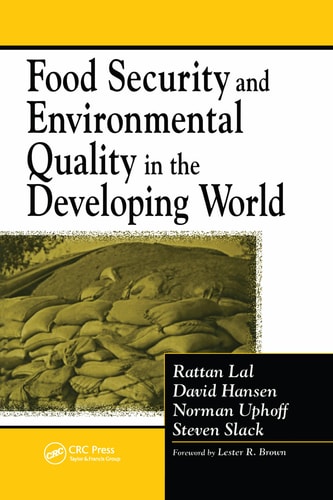
Food Security and Environmental Quality in the Developing World
0
0
As an Amazon Associate and affiliate partner, Menrva Books earns from qualifying purchases. Learn more
Author Description
Environmental Science and Technology / Food Science and Technology, Food Security and Environmental Quality in the Developing World, Can developing countries meet the food requirements of their growing populations without jeopardizing a natural resource base that is already under great stress? How can food security be reconciled with environmental quality in an industrializing society? Leading authorities from soil scientists to economists address these critical questions in Food Security and Environmental Quality in the Developing World- With a focus on India, this book reviews the state of natural resources, fertilizer and energy needs, and the potential importance of biotechnology as they affect all developing countries. It then addresses issues pertaining to water quality, agricultural chemicals, and pesticide residues on food. Part Three examines water harvesting, post-harvest food losses, storage and processing of animal products, and sustainability and inequality issues. The next sections deal with poverty alleviation, microfinance, gender equity, policy issues, and the role of the public sector. Finally, the book considers emerging issues and priorities. Developing countries have achieved an impressive increase in total food production over the past two decades, but at a high cost to environmental quality. As the populations of these countries continue to grow, soil degradation, pollution and contamination of natural waters, deteriorating air quality, and growing dependence on expensive and diminishing fossil fuels become increasing concerns. Food Security and Environmental Quality in the Developing World takes on the crucial challenge of enhancing agricultural production while reversing the alarming trends in soil and environmental degradation. Features, Addresses critical issues facing the developing world, Deals with global issues using India as a model, including post-harvest losses, water constraints, energy constraints, soil degradation, and climate ch
Menrva's Summary
THE THESIS
Can developing nations achieve food security without sacrificing their already strained natural resources? This book confronts the complex challenge of reconciling growing food demands with environmental preservation in developing countries. It examines the state of natural resources, the necessity of fertilizers and energy, and the potential of biotechnology, using India as a case study to address issues relevant to all developing nations. The work further investigates water quality, agricultural chemicals, pesticide residues, water harvesting, post-harvest losses, storage, processing, and sustainability concerns, culminating in discussions on poverty, microfinance, gender equity, policy, and emerging priorities.
THE SCOPE MAP
- State of natural resources in developing countries, with a focus on India.
- Fertilizer and energy needs for agricultural production.
- Potential importance and impact of biotechnology.
- Issues pertaining to water quality, agricultural chemicals, and pesticide residues.
- Examination of water harvesting techniques.
- Strategies for reducing post-harvest food losses.
- Storage and processing of animal products.
- Analysis of sustainability and inequality issues in food production.
- Consideration of poverty alleviation, microfinance, and gender equity.
- Discussion of policy issues and the role of the public sector.
THE AUTHORITY PERSPECTIVE
The book addresses critical issues facing the developing world, using India as a model to explore global challenges such as post-harvest losses, water and energy constraints, soil degradation, and climate change. It highlights the significant environmental costs incurred by past increases in food production and emphasizes the need to reverse trends in soil and environmental degradation. The work is structured to provide a comprehensive overview of these interconnected problems and potential solutions.
Page Count:
480
Publication Date:
2020-06-30
Publisher:
CRC Press
ISBN-10:
0367578581
ISBN-13:
9780367578589
Non-Fiction
Economics
Science
Water Quality
India
Food security
Developing Countries
Agriculture
Natural Resources
Poverty Alleviation
Biotechnology
Community Tags
Similar Books

Reader Comments
Share Your Thoughts
No comments yet. Be the first to share your thoughts!