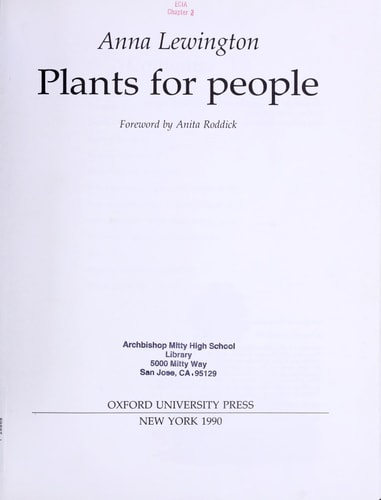
Plants for People
0
0
As an Amazon Associate and affiliate partner, Menrva Books earns from qualifying purchases. Learn more
Author Description
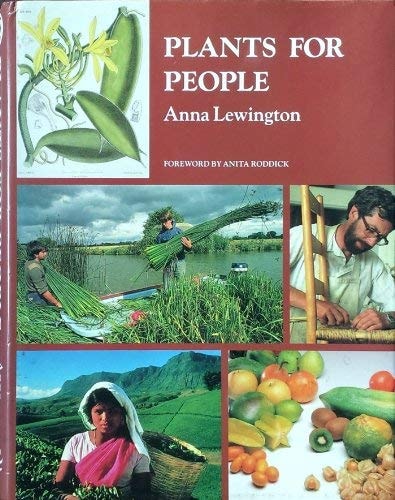
This fascinating book describes the countless and often surprising ways in which we use plants in everyday life. Beautifully illustrated with hundreds of photographs and drawings, most in full color, Plants for People documents the vital role of plant-derived material in industrial products, consumer goods, fashion, cosmetics, and many other common items. And it shows how the average person benefits from hundreds of plant products during the course of a typical day, often without even knowing it. However the relentless advance of industrialization, global population growth, and environmental mismanagement have caused the extinction of thousands of plant species, and many more are threatened. Thus, the awareness of our dependence on the plant kingdom has never been more vital. Here, the author traces the origin of modern products to their roots in areas as diverse as the Amazon rainforest and the lavender fields of France, and looks too at the ecologically sound uses native people make of plants, including techniques for creating shelter, clothing, food products, and herbal medicines. These are uses that hold immense potential for a modern world confronting the destructive impact of technology and waste. The author is a world traveller and ethnobotanist. Her book is immensely readable and informative. It will appeal to everyone--from high-school students to amateur botanists to general readers--interested in the amazing variety of the natural world and its boundless importance in everyday life.
Menrva's Summary
THE THESIS
This book investigates the pervasive yet often invisible reliance of modern human society on plant-derived materials and the urgent need for conservation in the face of environmental degradation. Anna Lewington, an experienced ethnobotanist and world traveler, synthesizes global research to demonstrate how everyday consumer goods, industrial products, and medicinal practices originate from the plant kingdom. The text argues that by understanding these botanical roots, society can better appreciate the necessity of preserving biodiversity against the pressures of industrialization and population growth.
THE SCOPE MAP
What You Will Find
- Documentation of plant-derived components in modern consumer goods, fashion, and cosmetics.
- Comparative analysis of traditional indigenous techniques for shelter and medicine versus modern industrial methods.
- Global case studies tracing products from their geographic origins, such as the Amazon rainforest and European agricultural fields.
- An assessment of the ecological impact of global population growth and industrial mismanagement on plant species.
THE AUTHORITY PERSPECTIVE
Experts and readers alike recognize this work as an accessible introduction to the field of ethnobotany for a general audience. The text is frequently cited for its ability to bridge the gap between complex botanical science and the practical, everyday experiences of the average consumer.
Page Count:
240
Publication Date:
1990-08-16
Publisher:
Oxford University Press
ISBN-10:
0195208404
ISBN-13:
9780195208405
Nature
Science
Botany
Ethnobotany
Environment
Community Tags
Other Editions(4)


Similar Books












Reader Comments
Share Your Thoughts
No comments yet. Be the first to share your thoughts!