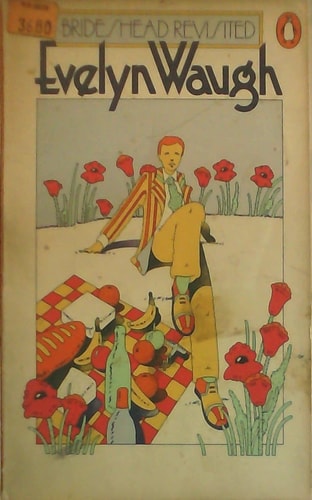
Brideshead Revisited
0
0
As an Amazon Associate and affiliate partner, Menrva Books earns from qualifying purchases. Learn more
Author Description
Evelyn Waugh’s most celebrated novel is a memory drama about the intense entanglement of the narrator, Charles Ryder, with a great Anglo-Catholic family. Written during World War II, the novel mourns the passing of the aristocratic world Waugh knew in his youth and vividly recalls the sensuous pleasures denied him by wartime austerities; in so doing it also provides a profound study of the conflict between the demands of religion and the desires of the flesh. At once romantic, sensuous, comic, and somber, Brideshead Revisited transcends Waugh’s familiar satiric exploration of his cast of lords and ladies, Catholics and eccentrics, artists and misfits, revealing him to be an elegiac, lyrical novelist of the utmost feeling and lucidity.The edition reprinted here contains Waugh’s revisions, made in 1959, and his preface to the revised edition.
Menrva's Summary
THE PULSE
Charles Ryder’s life becomes irrevocably altered when he enters the orbit of the aristocratic Marchmain family and their ancestral estate, Brideshead. The narrative follows Charles as he navigates his complex, evolving relationship with the family’s youngest son, Sebastian Flyte, and later with his sister, Julia. Set against the backdrop of the interwar period and the encroaching shadow of World War II, the story examines the tension between secular desires and the pull of Catholic faith. The novel is structured as a reflective, non-linear memoir, with the narrator looking back from the austerity of the 1940s to the opulent, vanished world of his youth.
INSIDE THE PAGES
- First-person retrospective narration
- Exploration of aristocratic decline in 20th-century England
- Detailed examination of Catholic theology and conversion
- Focus on the transition from youth to disillusionment
- Use of memory as a primary narrative device
- Contrast between the secular world and religious devotion
- Vivid descriptions of architectural and social settings
- Examination of the complexities of platonic and romantic intimacy
THE COLLECTIVE ECHO
Discussion often centers on the novel’s shift from Waugh’s earlier satirical style toward a more lyrical and elegiac tone. Readers frequently highlight the atmospheric quality of the prose, which captures the sensory details of a bygone era with precision. Critics often debate the effectiveness of the religious themes, noting how they serve as the central pivot for the characters' moral development. The balance between the nostalgic portrayal of the Marchmain family and the somber reality of the narrator’s later life remains a frequent point of analysis. Many readers find the work to be a significant study of the intersection between personal identity and inherited tradition.
Page Count:
336
Publication Date:
1981-01-06
Publisher:
Penguin UK
ISBN-10:
0140008217
ISBN-13:
9780140008210
Literary Fiction
Historical Fiction
classic
Coming of Age
Religious Fiction
Community Tags
Other Editions(9)








Reader Comments
Share Your Thoughts
No comments yet. Be the first to share your thoughts!