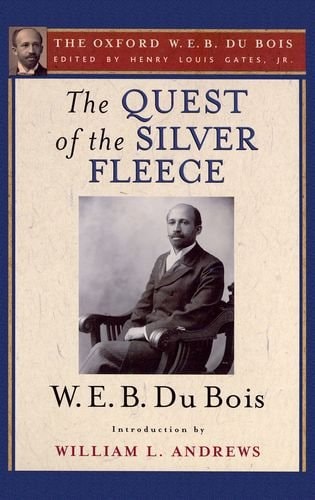
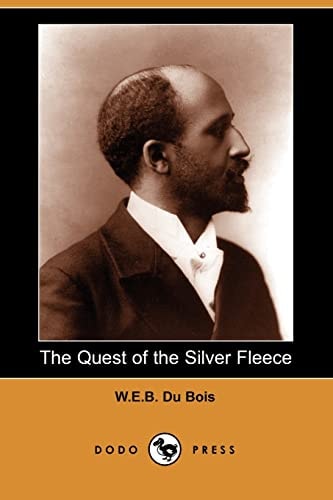
The Quest of the Silver Fleece
0
0
As an Amazon Associate and affiliate partner, Menrva Books earns from qualifying purchases. Learn more
Author Description
W. E. B. Du Bois was a public intellectual, sociologist, and activist on behalf of the African American community. He profoundly shaped black political culture in the United States through his founding role in the NAACP, as well as internationally through the Pan-African movement. Du Bois's sociological and historical research on African-American communities and culture broke ground in many areas, including the history of the post-Civil War Reconstruction period. Du Bois was also a prolific author of novels, autobiographical accounts, innumerable editorials and journalistic pieces, and several works of history.Arguably a contender for the Great American Novel, The Quest of the Silver Fleece is W. E. B. Du Bois's powerful first novel about Zora, a determined, strong Southern black woman who seeks to transcend race and social class in the late nineteenth century. Following the same path of the Greek myth after which it was named, Du Bois's novel confronts not only economic and political circumstances, but also racial and social issues of the time. Over a century after its original publication, we return to The Quest again and again for its political boldness about sexual, gender, and economic institutions. Zora, a breakthrough in the portrayal of black women, stands as a model of courage in a volatile moment in history. The novel portrays not only a story of economics but also of love, gender, and race. With a series introduction by editor Henry Louis Gates, Jr., and an introduction by William L. Andrews, this edition is essential for anyone interested in African American history.
Menrva's Summary
THE PULSE
Zora, a resilient woman in the post-Civil War South, fights to overcome systemic racial and economic barriers while pursuing personal autonomy. Driven by a desire to transcend the rigid social hierarchies of the late nineteenth century, Zora navigates a landscape defined by exploitation and political volatility. She faces opposition from entrenched economic institutions and societal prejudices that seek to maintain the status quo. The narrative employs a structure that mirrors the classical Greek myth of the Golden Fleece, grounding its social critique in a framework of allegory and realism. Through this lens, the text examines the intersection of gender, race, and capital in a developing nation.
INSIDE THE PAGES
- Allegorical parallels to the Greek myth of the Golden Fleece
- Detailed examination of post-Civil War economic structures
- Character-driven exploration of black womanhood in the South
- Critique of institutionalized racial and social hierarchies
- Integration of political theory into narrative prose
- Focus on the impact of land ownership and cotton production
- Exploration of the intersection between love and social mobility
- Stylistic blend of sociological observation and romantic fiction
THE COLLECTIVE ECHO
Discussion often centers on the novel's function as a vehicle for Du Bois's sociological theories regarding the Reconstruction era. Readers frequently highlight the character of Zora as a significant departure from the literary archetypes of her time, noting her agency and strength. Critics observe that the pacing balances personal romantic arcs with broader critiques of economic and gender institutions. The work is often analyzed for its bold political stance, which remains a focal point for those studying the evolution of African American literature. Scholars continue to examine how the author uses the narrative to challenge the prevailing social order of the late nineteenth century.
Page Count:
286
Publication Date:
2007-03-15
Publisher:
Oxford University Press
ISBN-10:
0195325753
ISBN-13:
9780195325751
New Used & Rental Textbooks
Social Issues
Fiction psychological
Historical
African Americans
African American
classic
Political
Community Tags
Other Editions(6)

Similar Books






Reader Comments
Share Your Thoughts
No comments yet. Be the first to share your thoughts!