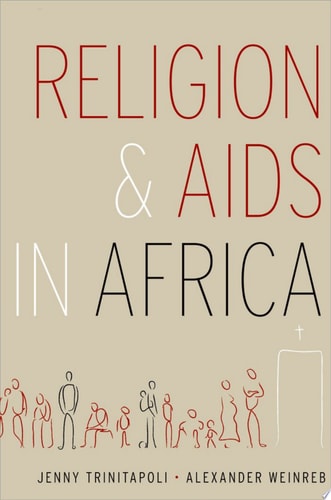
Religion and AIDS in Africa
0
0
As an Amazon Associate and affiliate partner, Menrva Books earns from qualifying purchases. Learn more
Author Description
The African AIDS epidemic has sparked fierce debate over the role of religion. Some scholars and activists argue that religion is contributing to the spread of HIV and to the stigmatization of people living with AIDS. Others claim that religion reduces the spread of HIV and promotes care and support for the sick and their survivors.Religion and AIDS in Africa offers the first comprehensive empirical account of the impact of religion on the AIDS epidemic. Jenny Trinitapoli and Alexander Weinreb draw upon extensive fieldwork in Malawi, including hundreds of interviews with religious leaders and lay people, and survey data from more than 30 other sub-Saharan African countries. Their research confirms the importance of religious narratives and institutions in everything related to AIDS in Africa. Among other key findings, Trinitapoli and Weinreb show that a combination of religious and biomedical approaches to prevention reduces risk most effectively; that a significant minority of religious leaders encourage condom use; that Christian congregations in particular play a crucial role in easing suffering among the sick and their dependents; and that religious spaces in general are vital for disseminating information and developing new strategies for HIV prevention and AIDS mitigation.For anyone wishing to move beyond the rhetoric and ideology that plague debates about one of the most challenging crises of our time, Religion and AIDS in Africa is the authoritative account. It will change the way readers think about religious life and about AIDS in the region.
Menrva's Summary
THE THESIS
This book investigates the complex, often polarized role that religious institutions and narratives play in the progression and mitigation of the AIDS epidemic across sub-Saharan Africa. Authors Jenny Trinitapoli and Alexander Weinreb utilize their extensive academic backgrounds in sociology and demography to move beyond ideological rhetoric. By synthesizing primary fieldwork from Malawi with broad survey data from over 30 African nations, they construct a rigorous empirical framework that evaluates how religious belief systems intersect with biomedical prevention strategies.
THE SCOPE MAP
What You Will Find
- Empirical analysis of religious influence on HIV transmission rates and public health outcomes.
- Comparative data sets covering over 30 sub-Saharan African countries.
- Qualitative insights derived from hundreds of interviews with religious leaders and lay congregants.
- Evaluation of the synergy between religious community support and biomedical health interventions.
THE AUTHORITY PERSPECTIVE
Experts recognize this work as a foundational empirical study that successfully bridges the gap between religious studies and public health policy. Readers frequently note the academic density of the prose, which provides a necessary, evidence-based counterpoint to the speculative debates often surrounding the topic.
Page Count:
296
Publication Date:
2012-08-09
Publisher:
Oxford University Press
ISBN-10:
0195335945
ISBN-13:
9780195335941
Religion
Public Health
Social Science
Epidemiology
Sociology
Human Disease
Africa
AIDS Disease