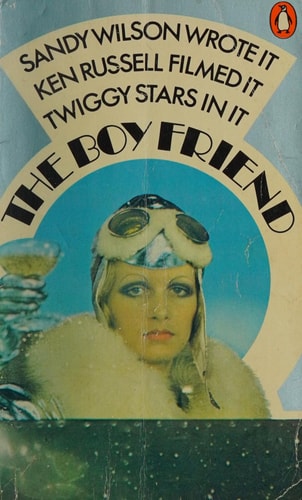
The Boy Friend
0
0
As an Amazon Associate and affiliate partner, Menrva Books earns from qualifying purchases. Learn more
Author Description
Madame Dubonnet's finishing school, near Nice, could exist only in musical comedy. The charming young pupils burst into song at the least provocation, and forbidden boy friends are forever popping through the french windows to make up the numbers. Polly Browne is too rich to be allowed a boy friend. Tony, for whom she falls, turns out to be the Hon. Tony Brockhurst, which is very lucky, because Polly thought he was just a delivery boy. Written in the fifties as "a new musical of the twenties" this is still the most successful, tuneful and witty of the send-up musicals, which ape the style of earlier, lighter-hearted and more disarming days.
Menrva's Summary
THE PULSE
Polly Browne, a wealthy student at a finishing school near Nice, finds her romantic aspirations complicated by her social standing and the arrival of a mysterious delivery boy. Polly navigates the rigid expectations of her school and the social hierarchy of the 1920s while attempting to secure a relationship with Tony, a young man she initially mistakes for a common worker. The narrative unfolds through the conventions of musical comedy, where characters frequently break into song to express their desires and frustrations. The primary conflict arises from the tension between Polly's immense wealth and her desire for a genuine connection, all while the school environment remains a site of constant, lighthearted disruption.
INSIDE THE PAGES
- Musical comedy structure with integrated song sequences
- Satirical take on 1920s social mores and romantic tropes
- Setting centered on a finishing school in the French Riviera
- Ensemble cast featuring distinct archetypes
- Use of mistaken identity as a primary plot driver
- Lighthearted, whimsical tone throughout the dialogue
- Thematic focus on class distinctions and romantic idealism
- Stylized representation of early twentieth-century leisure culture
THE COLLECTIVE ECHO
Discussion often centers on the work's status as a deliberate pastiche of 1920s musical theater styles. Readers and critics frequently highlight the play's ability to balance wit with a disarming, nostalgic atmosphere that avoids cynicism. The pacing is noted for its brisk, energetic movement, which mirrors the lighthearted nature of the genre it parodies. Many observers appreciate how the narrative maintains a consistent tone of playful artifice while exploring the romantic entanglements of its young protagonists. The work remains a staple for those interested in the evolution of musical comedy and the specific stylistic conventions of mid-century theater.
Page Count:
0
Publication Date:
1972-01-01
Publisher:
Penguin Putnam~trade
ISBN-10:
0140013504
ISBN-13:
9780140013504
Romance
Musical
Theater
Comedy
Dramas & Plays
1920s
Plays