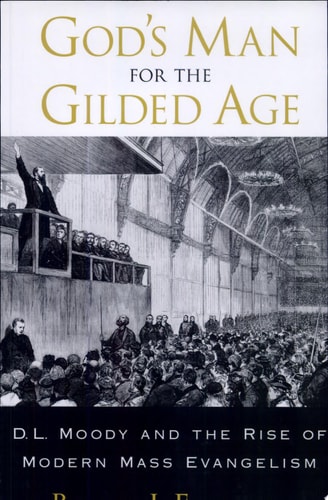
God's Man for the Gilded Age: D.L. Moody and the Rise of Modern Mass Evangelism: D.L.Moody and the Rise of Modern Mass Evangelism
0
0
As an Amazon Associate and affiliate partner, Menrva Books earns from qualifying purchases. Learn more
Author Description
At his death on the eve of the 20th century, D.L. Moody was widely recognized as one of the most beloved and important of men in 19th-century America. A Chicago shoe salesman with a fourth grade education, Moody rose from obscurity to become God's man for the Gilded Age. He was the Billy Graham of his day--indeed it could be said that Moody invented the system of evangelism that Graham inherited and perfected. Bruce J. Evensen focuses on the pivotal years during which Moody established his reputation on both sides of the Atlantic through a series of highly popular and publicized campaigns. In four short years Moody forged the bond between revivalism and the mass media that persists to this day. Beginning in Britain in 1873 and extending across America's urban landscape, first in Brooklyn and then in Philadelphia, New York, Chicago, and Boston, Moody used the power of prayer and publicity to stage citywide crusades that became civic spectacles. Modern newspapers, in the grip of economic depression, needed a story to stimulate circulation and found it in Moody's momentous mission. The evangelist and the press used one another in creating a sense of civic excitement that manufactured the largest crowds in municipal history. Critics claimed this machinery of revival was man-made. Moody's view was that he'd rather advertise than preach to empty pews. He brought a businessman's common sense to revival work and became, much against his will, a celebrity evangelist. The press in city after city made him the star of the show and helped transform his religious stage into a communal entertainment of unprecedented proportions. In chronicling Moody's use of the press and their use of him, Evensen sheds new light on a crucial chapter in the history of evangelicalism and demonstrates how popular religion helped form our modern media culture.
Menrva's Summary
THE THESIS
This work investigates how D.L. Moody transformed 19th-century revivalism by integrating it with the emerging power of mass media. Bruce J. Evensen, a scholar of media and history, examines the symbiotic relationship between the evangelist and the press during the Gilded Age. By analyzing Moody's transatlantic campaigns, the book argues that his methods established the blueprint for modern mass evangelism and significantly influenced the development of contemporary media culture.
THE SCOPE MAP
What You Will Find
- An analysis of the 1873 British campaigns and subsequent urban crusades in American cities like New York, Chicago, and Boston.
- A detailed examination of the symbiotic relationship between religious revivalism and newspaper circulation strategies.
- Historical evidence drawn from period journalism, personal correspondence, and biographical records of the Gilded Age.
- A framework for understanding how religious figures transitioned into public celebrities through the use of publicity and spectacle.
THE AUTHORITY PERSPECTIVE
Experts recognize this text as a significant contribution to the intersection of religious history and media studies. Readers frequently note the clarity with which Evensen documents the professionalization of evangelism and its lasting impact on American cultural institutions.
Page Count:
240
Publication Date:
2003-01-01
Publisher:
Oxford University Press
ISBN-10:
019534748X
ISBN-13:
9780195347487
Religion
History
Biography
Media Studies
Kindle Store
Church History
Categories
Kindle eBooks
Church Leadership
Evangelicalism
Evangelism
Community Tags
Similar Books