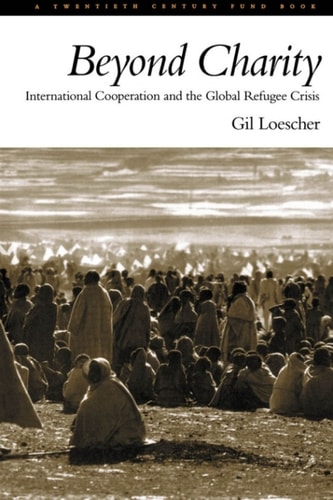
Beyond Charity: International Cooperation and the Global Refugee Crisis
0
0
As an Amazon Associate and affiliate partner, Menrva Books earns from qualifying purchases. Learn more
Author Description
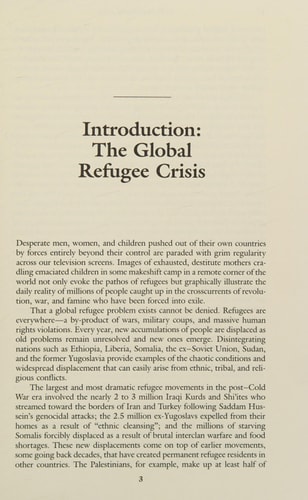
With more than 18 million refugees worldwide, the refugee problem has fostered an intense debate regarding what political changes are necessary in the international system to provide effective solutions in the 1990s and beyond. In the past, refugees have been perceived largely as a problem of international charity, but as the end of the Cold War triggers new refugee movements across the globe, governments are being forced to develop a more systematic approach to the refugee problem. Beyond Charity provides the first extensive overview of the world refugee crisis today, asserting that refugees raise not only humanitarian concerns but also issues of international peace and security. Gil Loescher argues persuasively that a central challenge in the post Cold-War era is to develop a comprehensive refugee policy that preserves the right of asylum while promoting greater political and diplomatic efforts to address the causes of flight. He presents the contemporary crisis in a historical framework and explores the changing role of the Office of the United Nations High Commissioner for Refugees. Loescher suggests short-term and long-term reforms that address both the current refugee crisis and its underlying causes. The book also details the ways governmental structures and international organizations could be strengthened to assume more effective assistance, protection, and political mediation functions. Beyond Charity helps frame the debate on the global refugee crisis and offers directions for more effective approaches to refugee problems at present and in the future.
Menrva's Summary
THE THESIS
This book investigates whether the international community can transition from a reactive model of humanitarian charity to a proactive, systematic policy framework for managing global refugee crises. Gil Loescher, a scholar of international relations, utilizes historical analysis and institutional review to argue that refugee movements are inextricably linked to global peace and security. He posits that the post-Cold War era necessitates a fundamental restructuring of international organizations, specifically the UNHCR, to address the root causes of displacement rather than merely managing the symptoms of flight.
THE SCOPE MAP
What You Will Find
- Historical analysis of refugee movements throughout the 20th century.
- Evaluation of the Office of the United Nations High Commissioner for Refugees (UNHCR) and its operational limitations.
- Proposed policy reforms for both short-term humanitarian assistance and long-term political mediation.
- Frameworks for integrating refugee protection into broader international security and diplomatic strategies.
THE AUTHORITY PERSPECTIVE
Experts recognize this work as a foundational text for understanding the intersection of humanitarian aid and international political structures. Readers frequently note the academic density of the prose, which provides a comprehensive, albeit sobering, look at the systemic challenges inherent in global refugee policy.
Page Count:
276
Publication Date:
1996-01-01
Publisher:
Oxford University Press
ISBN-10:
0195356071
ISBN-13:
9780195356076
History
Human rights
Sociology
International relations
Community Tags
Other Editions(3)
Similar Books






Reader Comments
Share Your Thoughts
No comments yet. Be the first to share your thoughts!