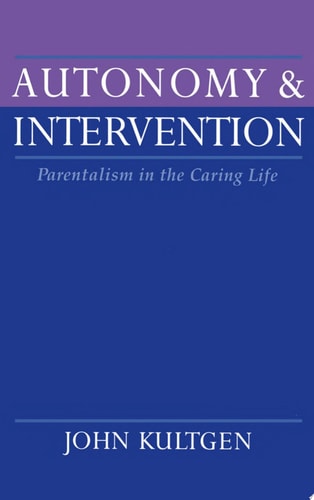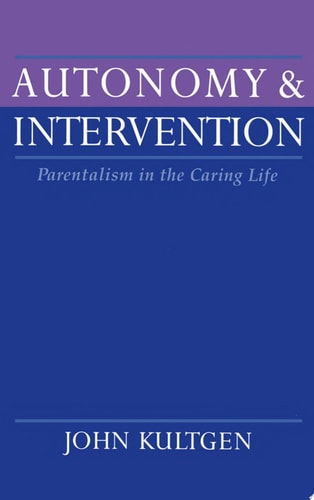
Autonomy and Intervention: Parentalism in the Caring Life
0
0
As an Amazon Associate and affiliate partner, Menrva Books earns from qualifying purchases. Learn more
Author Description
The basic relationship between people should be care, and the caring life is the highest which humans can live. Unfortunately, care that is not thoughtful slides into illegitimate intrusion on autonomy. Autonomy is a basic good, and we should not abridge it without good reason. On the other hand, it is not the only good. We must sometimes intervene in the lives of others to protect them from grave harms or provide them with important benefits. The reflective person, therefore, needs guidelines for caring. Some contemporary moralists condemn paternalism categorically. This work examines weaknesses in their arguments and proposes new guidelines for paternalism, which it calls "parentalism" to avoid the patriarchal connotations of the old term. Its antiparentalism is more moderate than standard antipaternalism based on an exaggerated respect for autonomy. The work explores implications for both the personal sphere of interactions between individuals, such as friends and family members, and the public sphere of institutions, legislation, and the professional practices.
Menrva's Summary
THE THESIS
This work investigates the moral tension between the duty to provide care and the fundamental human right to personal autonomy. John Kultgen, a philosopher specializing in ethics and professional practice, critiques the categorical rejection of paternalism in contemporary moral discourse. He proposes a refined framework termed "parentalism" to navigate the complexities of intervening in the lives of others, arguing that an absolute prioritization of autonomy often ignores the necessity of protecting individuals from harm or securing significant benefits.
THE SCOPE MAP
What You Will Find
- A critical analysis of contemporary anti-paternalist arguments and their limitations.
- The introduction of "parentalism" as a nuanced alternative to traditional paternalistic models.
- Ethical guidelines for intervention within personal relationships, including friends and family.
- Applications of parentalist theory to public policy, institutional governance, and professional codes of conduct.
THE AUTHORITY PERSPECTIVE
Scholars and ethicists frequently cite this text as a significant contribution to the debate on the limits of autonomy in care-based relationships. Readers often note the analytical rigor Kultgen applies to the distinction between intrusive paternalism and necessary, thoughtful care.
Page Count:
280
Publication Date:
1995-01-01
Publisher:
Oxford University Press
ISBN-10:
0195359062
ISBN-13:
9780195359060
Philosophy
Political Philosophy
Professional Ethics
Social Science
Ethics