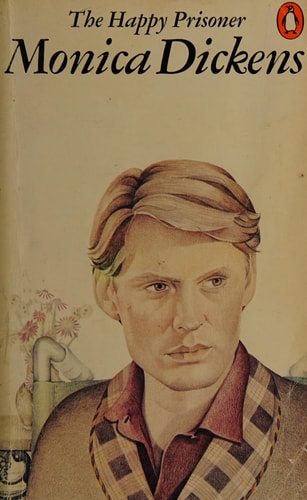
The Happy Prisoner
0
0
As an Amazon Associate and affiliate partner, Menrva Books earns from qualifying purchases. Learn more
Author Description
It is the end of WW II and the household of Mrs. North, a well-to-do widow with a country cottage, is very busy. War circumstances brought both of her daughters loud but good-hearted tomboy, Violet, and highly-strung and over sensitive Heather with her two small children. Mrs. North is also taking care of her young niece, Evelyn, a lively child who loves to play on the local farm and has a great passion for animals. But at the center of all this is Oliver, Mrs. North's only son who lost his leg during the war service abroad.Recovering from his injuries, bed-ridden Oliver has nothing better to do but observe the busy lives of the people around him. Treated as a hero and a confidant by all the women in his family, Oliver begins to enjoy his new role as a self-proclaimed counselor. Due to his advice, Violet, an independent spinster, unexpectedly accepts the marriage proposal from a local farmer. Her wedding is a success and Violet finds a new happiness in her marriage, but soon Oliver's meddling in his family affairs goes too far. Will his risky instructions save or ruin Heather's marriage, which is at the brink of crisis, when her husband comes back from Australia after a few years of separation? Will Oliver learn to accept his new circumstances? Will he finally face to the reality and start to rebuild his own life?In this compendium plot, Monica Dickens, with her typical attention to detail, humor and talent for creating vivid characters, explores complicated life stories of the close-knit family and their friends at the end of the war. The Happy Prisoner was first published in 1946.
Menrva's Summary
THE PULSE
Following his return from the war with a life-altering injury, Oliver North finds himself confined to his bed, where he begins to exert influence over the domestic lives of his female relatives.
Oliver occupies a central position in his mother's country cottage, acting as a confidant and advisor to his sisters and niece. As he navigates his own physical limitations and the transition to civilian life, he attempts to manage the interpersonal crises of his family members. The narrative examines the tension between his desire for control and the reality of his dependency. The story unfolds through a domestic lens, focusing on the psychological shifts within a household adjusting to the conclusion of World War II.
INSIDE THE PAGES
- Focus on domestic life in post-war England
- Exploration of physical disability and recovery
- Character-driven interpersonal dynamics
- Use of humor to balance serious themes
- Detailed observation of family roles
- Examination of societal expectations for women
- Exploration of the psychological impact of war
- Focus on the transition from military to civilian life
THE COLLECTIVE ECHO
Readers frequently highlight the author's ability to craft vivid, distinct characters within a confined setting. Discussion often centers on the complex morality of Oliver's meddling and how his physical confinement shapes his psychological development. Critics note the balance between the lighthearted domestic humor and the underlying gravity of the post-war setting. The pacing is often described as deliberate, allowing for deep exploration of the family's internal conflicts and personal growth. Many readers appreciate the nuanced portrayal of the domestic sphere during a period of significant social transition.
Page Count:
320
Publication Date:
1969-01-01
Publisher:
Penguin Books Ltd
ISBN-10:
0140012710
ISBN-13:
9780140012712
Historical Fiction
Domestic fiction
British literature
Contemporary
Post-War
Family Saga
Community Tags
Similar Books