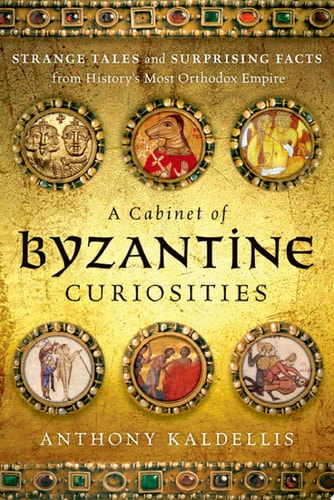
A Cabinet of Byzantine Curiosities: Strange Tales and Surprising Facts from History's Most Orthodox Empire
0
0
As an Amazon Associate and affiliate partner, Menrva Books earns from qualifying purchases. Learn more
Author Description
Weird, decadent, degenerate, racially mixed, superstitious, theocratic, effeminate, and even hyper-literate, Byzantium has long been regarded by many as one big curiosity. According to Voltaire, it represented "a worthless collection of miracles, a disgrace for the human mind"; for Hegel, it was "a disgusting picture of imbecility."A Cabinet of Byzantine Curiosities will churn up these old prejudices, while also stimulating a deeper interest among readers in one of history's most interesting civilizations. Many of the zanier tales and trivia that are collected here revolve around the political and religious life of Byzantium. Thus, stories of saints, relics, and their miracles-from the hilarious to the revolting-abound. Byzantine bureaucracy (whence the adjective "Byzantine"), court scandals, and elaborate penal code are world famous. And what would Byzantium be without its eunuchs, whose ambiguous gender produced odd and risible outcomes in different contexts? The book also contains sections on daily life that are equally eye-opening, including food (from aphrodisiacs to fermented fish sauce), games such as polo and acrobatics, and obnoxious views of foreigners and others (e.g., Germans, Catholics, Arabs, dwarves). But lest we overlook Byzantium's more honorable contributions to civilization, also included are some of the marvels of Byzantine science and technology, from the military (flamethrowers and hand grenades) to the theatrical ("elevator" thrones, roaring mechanical lions) and medical (catheters and cures, some bizarre). This vast assortment of historical anomaly and absurdity sheds vital light on one of history's most obscure and orthodox empires.
Menrva's Summary
THE THESIS
This book investigates the historical reputation of the Byzantine Empire by curating a collection of anomalous, bizarre, and surprising anecdotes that challenge traditional perceptions of the civilization as merely decadent or degenerate. Anthony Kaldellis, a professor of classics and expert in Byzantine history, utilizes primary source accounts and historical records to dismantle long-standing prejudices held by Enlightenment-era thinkers. By presenting the empire through its own eccentricities, he argues that the Byzantine experience was far more complex, innovative, and human than its historical detractors suggested.
THE SCOPE MAP
What You Will Find
- Anecdotes regarding political scandals, religious relics, and court bureaucracy.
- Historical data on daily life, including culinary habits, sports, and social attitudes toward foreigners.
- Technical descriptions of Byzantine innovations in military weaponry, medical devices, and theatrical engineering.
Scope Limits
- The text does not provide a comprehensive chronological political history of the empire.
- It avoids deep academic analysis of macroeconomic structures or long-term geopolitical shifts.
THE AUTHORITY PERSPECTIVE
Readers and historians frequently note that the text serves as an accessible entry point for those interested in the human side of Byzantine studies. Experts highlight the work as a successful bridge between rigorous academic research and popular history, noting its ability to humanize a frequently misunderstood era.
Page Count:
248
Publication Date:
2017-01-01
Publisher:
Oxford University Press
ISBN-10:
0190625961
ISBN-13:
9780190625962
Non-Fiction
History
Byzantine History
Trivia
Cultural History
Ancient History
Church History
Cultural Anthropology
Community Tags
Similar Books