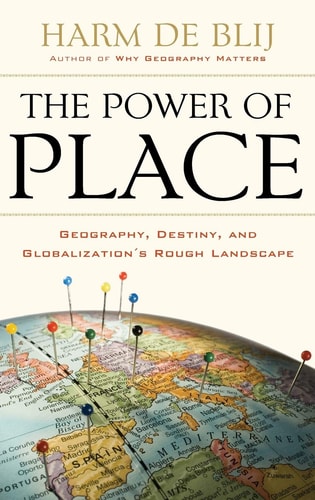
The Power of Place: Geography, Destiny, and Globalization's Rough Landscape
0
0
As an Amazon Associate and affiliate partner, Menrva Books earns from qualifying purchases. Learn more
Author Description
The world is not as mobile or as interconnected as we like to think. As Harm de Blij argues in The Power of Place, in crucial ways--from the uneven distribution of natural resources to the unequal availability of opportunity--geography continues to hold billions of people in its grip. We are all born into natural and cultural environments that shape what we become, individually and collectively. From our "mother tongue" to our father's faith, from medical risks to natural hazards, where we start our journey has much to do with our destiny. Hundreds of millions of farmers in the river basins of Asia and Africa, and tens of millions of shepherds in isolated mountain valleys from the Andes to Kashmir, all live their lives much as their distant ancestors did, remote from the forces of globalization. Incorporating a series of persuasive maps, De Blij describes the tremendously varied environments across the planet and shows how migrations between them are comparatively rare. De Blij also looks at the ways we are redefining place so as to make its power even more potent than it has been, with troubling implications.
Menrva's Summary
THE THESIS
Does geography remain the primary determinant of human destiny in an era of perceived global connectivity? Harm de Blij, a distinguished geographer, utilizes his extensive academic background to challenge the myth of a borderless, interconnected world. He argues that physical and cultural environments exert a profound, often inescapable influence on individual and collective outcomes, effectively countering the narrative that globalization has rendered location irrelevant.
THE SCOPE MAP
What You Will Find
- Analysis of the uneven distribution of natural resources and economic opportunity.
- Examination of how cultural environments, such as language and faith, dictate life trajectories.
- Integration of cartographic data and persuasive maps to illustrate environmental variance.
- Discussion on the persistence of traditional lifestyles in isolated regions despite global trends.
THE AUTHORITY PERSPECTIVE
Experts and readers frequently cite this work as a vital counter-narrative to the hyper-globalization theories prevalent in modern political discourse. The text is noted for its accessible yet rigorous academic approach, making it a foundational resource for understanding the enduring constraints of physical geography.
Page Count:
280
Publication Date:
2008-07-21
Publisher:
Oxford University Press
ISBN-10:
0195367707
ISBN-13:
9780195367706
Politics
Non-Fiction
Geography
Sociology
Globalization
Community Tags
Similar Books