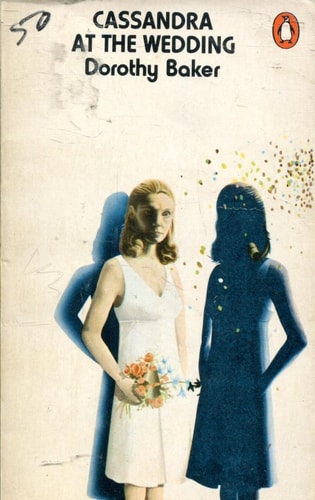
Cassandra at the Wedding
0
0
As an Amazon Associate and affiliate partner, Menrva Books earns from qualifying purchases. Learn more
Author Description
Cassandra Edwards is a graduate student at Berkeley: gay, brilliant, nerve-wracked, miserable. At the beginning of this novel, she drives back to her family ranch in the foothills of the Sierras to attend the wedding of her identical twin, Judith, to a nice young doctor from Connecticut. Cassandra, however, is hell-bent on sabotaging the wedding. Dorothy Baker's entrancing tragicomic novella follows an unpredictable course of events in which her heroine appears variously as conniving, self-aware, pitiful, frenzied, absurd, and heartbroken—at once utterly impossible and tremendously sympathetic. Cassandra reckons with her complicated feelings about the sister who she feels owes it to her to be her alter ego; with her father, a brandy-soaked retired professor of philosophy; and with the ghost of her dead mother, as she struggles to come to terms with the only life she has. First published in 1962, Cassandra at the Wedding is a book of enduring freshness, insight, and verve. Like the fiction of Jeffrey Eugenides and Jhumpa Lahiri, it is the work of a master stylist with a profound understanding of the complexities of the heart and mind.
Menrva's Summary
THE PULSE
Cassandra Edwards returns to her family ranch with the explicit intent to dismantle her twin sister's upcoming wedding. Cassandra, a graduate student grappling with profound internal instability, views her sister Judith’s marriage as a betrayal of their shared identity. As she navigates the physical space of the family ranch, she confronts her father’s detachment and the lingering influence of her deceased mother. The narrative utilizes a focused, intimate perspective to examine the logical and emotional constraints of a woman attempting to force her twin back into a state of codependency. The prose captures the frenzied, often erratic internal monologue of a protagonist struggling against the inevitability of separation.
INSIDE THE PAGES
- First-person psychological exploration
- Focus on twin dynamics and identity
- Setting centered on a rural family ranch
- Themes of grief and familial estrangement
- Exploration of intellectual and emotional isolation
- Tragicomic narrative tone
- Examination of parental influence and legacy
- Non-linear reflection on past and present
THE COLLECTIVE ECHO
Discussion often centers on the sharp, precise prose style that defines the protagonist's volatile internal state. Readers frequently highlight the effectiveness of the twin dynamic as a vehicle for exploring themes of individuality and codependency. Critics often note the balance between the dark, psychological weight of the narrative and the lighter, ironic moments of family interaction. The atmosphere of the ranch serves as a claustrophobic backdrop that intensifies the central conflict throughout the text. Many readers appreciate the author's ability to render a difficult, often unlikable character with enough nuance to maintain engagement until the final resolution.
Page Count:
208
Publication Date:
1970-09-24
Publisher:
Penguin
ISBN-10:
014001604X
ISBN-13:
9780140016048
Literary Fiction
Tragicomedy
classic
Family Drama
Contemporary
Psychological